
Introduction
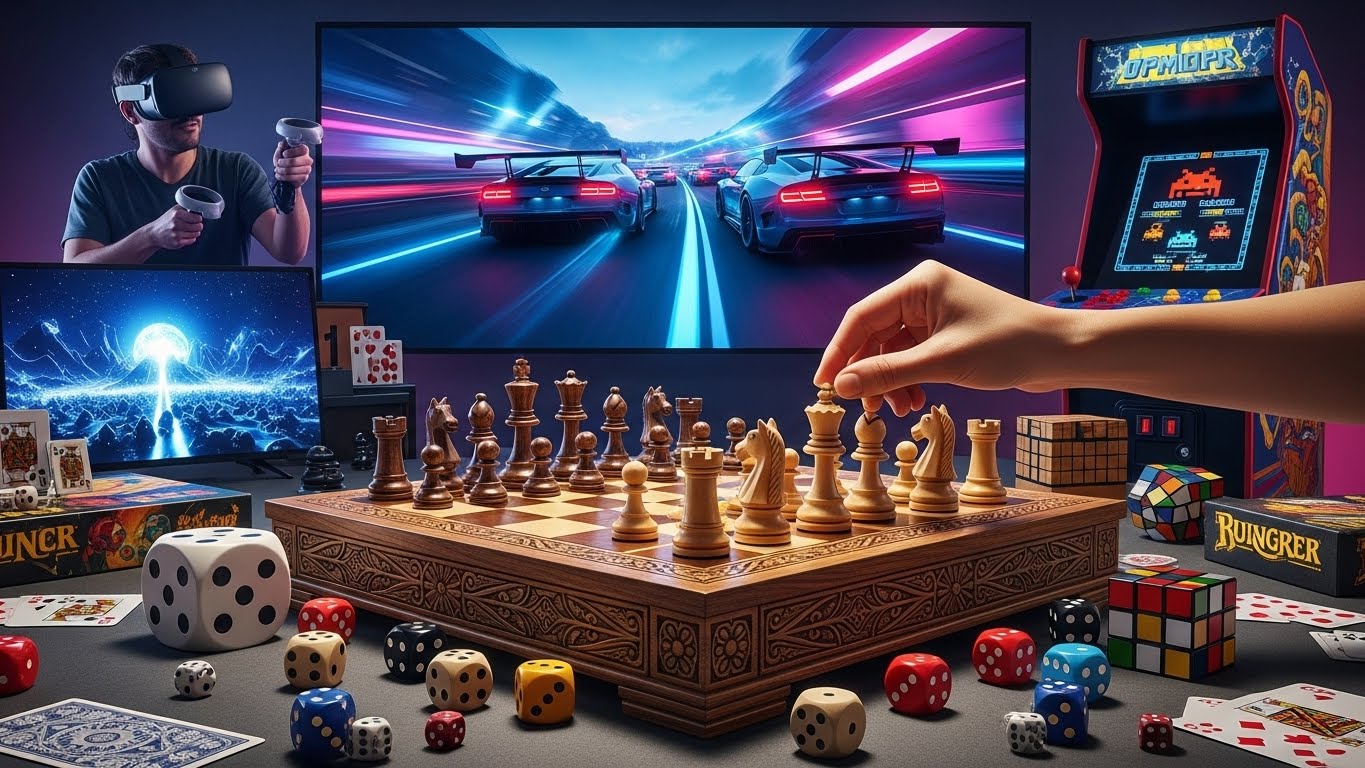
Games have been an integral part of human culture for centuries. From ancient board games to modern digital experiences, they have served as tools for entertainment, education, socialization, and even competition. In today’s era, the gaming industry has transformed into a global phenomenon, encompassing video games, mobile apps, virtual reality, and esports. This blog delves into the evolution of games, their cultural and social impact, the technology behind modern gaming, and the trends shaping the future of this dynamic industry.
The Origins of Games
Games are as old as human civilization. Archaeologists have discovered evidence of ancient games dating back thousands of years. Early civilizations, including the Egyptians, Greeks, and Chinese, developed games to serve both recreational and educational purposes. For example, Senet in Egypt, considered one of the oldest known board games, was played as both entertainment and a spiritual practice.
Similarly, the game of Go, originating in China over 2,500 years ago, showcased strategic thinking and skill. Chess, another ancient classic, developed in India, eventually spread worldwide and became a symbol of strategy and intellectual prowess. These early games illustrate humanity’s intrinsic desire for structured play and mental challenge.
The Evolution of Modern Gaming
The 20th century witnessed the birth of modern gaming. Initially, games were primarily physical, including sports, board games, and card games. The invention of computers and consoles in the 1970s and 1980s revolutionized entertainment. Classic games like Pong, Pac-Man, and Tetris introduced interactive digital experiences, captivating millions of players worldwide.
The 1990s brought more advanced consoles, such as the Super Nintendo and Sega Genesis, offering immersive graphics, rich narratives, and complex gameplay mechanics. This era marked the beginning of gaming as a mainstream cultural phenomenon. By the early 2000s, online multiplayer games emerged, connecting players across the globe and fostering vibrant online communities.
The Technology Behind Modern Games
Modern gaming relies heavily on technological innovation. Graphics engines, artificial intelligence, and cloud computing have transformed how games are developed and experienced. Game developers use advanced 3D rendering techniques to create lifelike environments, realistic physics, and detailed character animations.
Artificial intelligence enhances gameplay by creating adaptive opponents, personalized experiences, and immersive storytelling. Cloud gaming technology allows players to access high-quality games on devices without the need for expensive hardware. Mobile gaming, driven by smartphones and tablets, has further expanded accessibility, making gaming a part of everyday life for millions.
Types of Games
The gaming landscape is diverse, with various genres catering to different audiences. Understanding these types helps appreciate the industry’s breadth:
Action Games: These games focus on fast-paced gameplay, reflexes, and coordination. Popular examples include first-person shooters and platformers, where players must navigate challenges and defeat opponents.
Adventure Games: Adventure games emphasize exploration, storytelling, and problem-solving. Players often embark on quests, solve puzzles, and interact with complex narratives.
Role-Playing Games: RPGs allow players to assume the roles of characters in immersive worlds. Players make choices, develop skills, and influence the game’s storyline. Examples include fantasy epics and futuristic sci-fi adventures.
Simulation Games: Simulation games mimic real-world activities, from city-building to flight simulators. These games provide realistic experiences, often appealing to players who enjoy strategic planning and management.
Sports and Racing Games: These games replicate real-world sports or competitive racing, offering players the thrill of competition and the challenge of mastering mechanics and strategy.
Casual Games: Casual games are simple, accessible, and easy to play in short bursts. Mobile apps like puzzle games and social games fall into this category, reaching a wide audience.
The Social Impact of Gaming
Games are more than entertainment; they are social tools that bring people together. Multiplayer games enable interaction across cultures, fostering friendships, teamwork, and collaboration. Online communities often form around shared gaming experiences, creating spaces for communication, mentorship, and collective problem-solving.
Gaming can also have educational benefits. Puzzle-solving, strategy, and role-playing games improve critical thinking, creativity, and decision-making skills. Certain games promote physical activity through motion-sensing technology or encourage learning through gamified content.
However, the social impact of gaming is complex. Concerns about excessive screen time, online harassment, and addiction have prompted researchers and developers to focus on responsible gaming practices. Balancing enjoyment with healthy engagement remains a key challenge for the industry.
The Rise of Esports
Esports, or competitive gaming, has emerged as a major component of the gaming ecosystem. Professional players compete in tournaments for substantial prizes, and events are broadcast to millions of viewers worldwide. Esports spans multiple genres, including first-person shooters, real-time strategy games, and multiplayer online battle arenas.
The growth of esports has elevated gaming to a legitimate career path. Players, commentators, and content creators now form an interconnected ecosystem, supported by sponsorships, merchandise, and streaming platforms. Universities and organizations even offer esports scholarships, recognizing the skill, discipline, and strategic thinking involved in competitive gaming.
Virtual Reality and Augmented Reality Gaming
Virtual reality (VR) and augmented reality (AR) represent the next frontier in gaming. VR immerses players in fully digital environments, providing unparalleled interactivity and presence. Players can explore fantastical worlds, engage in realistic simulations, and experience games in three-dimensional spaces.
AR enhances real-world experiences by overlaying digital content onto physical surroundings. Mobile AR games like treasure hunts and interactive puzzles blend reality with imagination, creating unique gaming experiences. Both VR and AR demonstrate how technology continues to push the boundaries of play, making games more engaging and immersive.
The Economics of Gaming
The gaming industry is a global economic powerhouse. It generates billions in revenue annually, spanning game development, hardware, software, esports, and merchandising. The rise of digital distribution platforms has revolutionized revenue models, allowing developers to reach global audiences without relying on physical sales.
In-game purchases, downloadable content, and subscription models have created sustainable revenue streams for developers while offering players ongoing content and experiences. The economic impact extends to job creation, technological innovation, and the development of ancillary industries, including streaming, marketing, and esports management.
Future Trends in Gaming
The future of gaming promises even greater innovation and expansion. Key trends include:
Cloud and Streaming Gaming: Cloud technology allows high-quality games to be played without powerful hardware. Streaming services make gaming accessible to broader audiences, transforming the way games are consumed.
Artificial Intelligence and Machine Learning: AI will continue to enhance gameplay, creating adaptive worlds, intelligent NPCs, and personalized experiences for players.
Cross-Platform Play: Games that allow seamless play across devices are breaking down barriers between console, PC, and mobile players, promoting inclusivity and broader communities.
Sustainability and Ethical Practices: Game developers are increasingly mindful of environmental impact, digital ethics, and inclusivity, creating games that align with social responsibility.
Gamification in Education and Work: The principles of gaming are being applied to learning and professional development, transforming training, engagement, and skill acquisition through interactive experiences.
Conclusion
Games have evolved from simple pastimes to a global cultural, technological, and economic phenomenon. They offer entertainment, foster social connections, develop cognitive skills, and even provide career opportunities in esports and content creation. The industry’s growth is fueled by technological innovation, creative storytelling, and the ever-expanding global community of players.
As gaming continues to evolve, the lines between reality and virtual worlds will blur, and the ways we interact, learn, and entertain ourselves will continue to transform. From ancient board games to immersive virtual reality experiences, games remain an enduring reflection of human creativity, curiosity, and the universal desire to play.
The world of games is vast, dynamic, and constantly evolving. Whether for leisure, competition, or education, games continue to shape our experiences, connect people across borders, and inspire innovation. The future promises even more exciting developments, making gaming an integral part of modern culture and human interaction.