Introduction
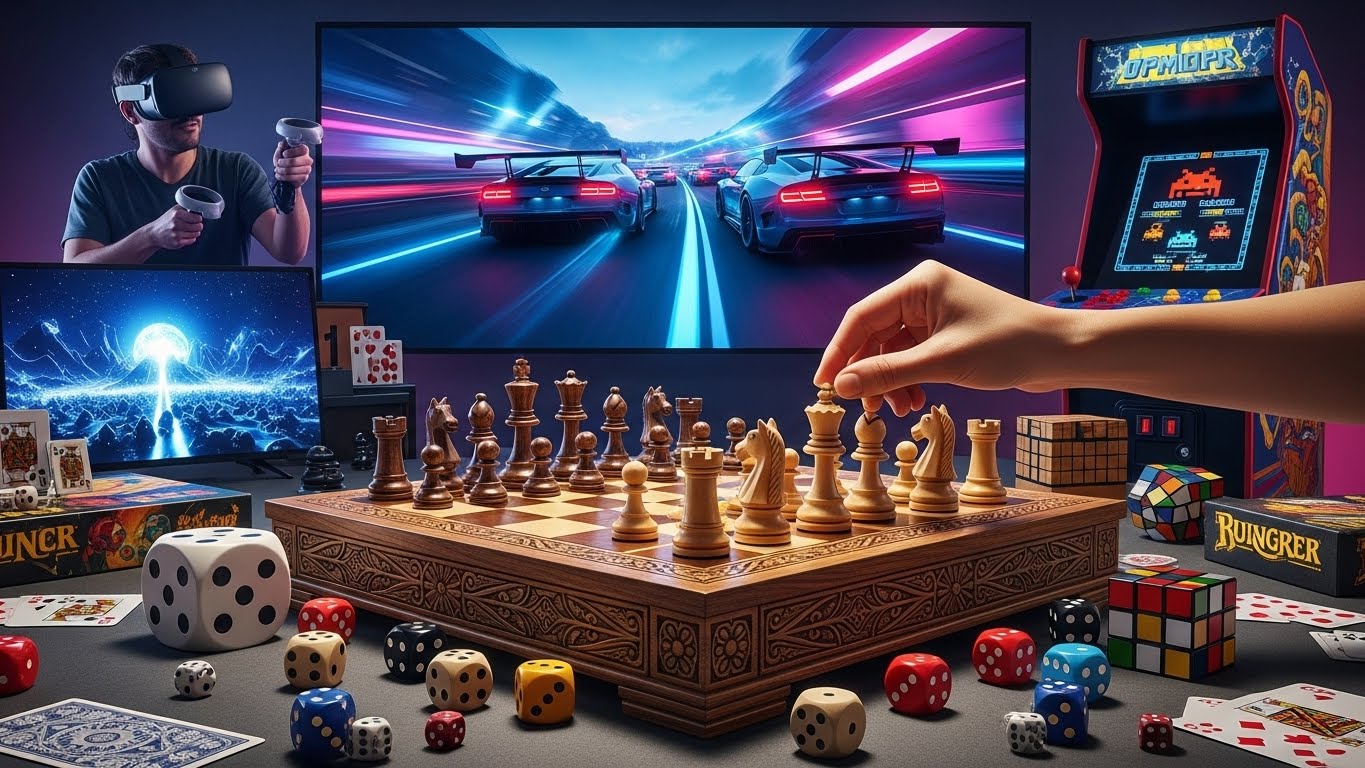
Games have been an essential part of human civilization for thousands of years, evolving from ancient board games and sports to the digital marvels of today. Whether played for fun, competition, or relaxation, games have always reflected our creativity, intelligence, and desire for connection. In the modern era, gaming is no longer just a pastime—it is a global industry that influences technology, education, and even social interaction. From casual mobile players to professional eSports athletes, gaming has become a shared cultural phenomenon that transcends age, gender, and geography. This blog explores the fascinating world of games, their evolution, impact, and the exciting possibilities they hold for the future.
The Origins of Games
The history of games stretches back to the dawn of human civilization. Archaeological discoveries reveal that games like Senet in Egypt and the Royal Game of Ur in Mesopotamia date back over 5,000 years. These early forms of play were not just for entertainment—they also held religious and social significance. Over time, societies across the world developed their own games, from chess in India to Go in China. These games required strategy, foresight, and intellect, making them not only enjoyable but also educational. They served as training grounds for decision-making, patience, and mental discipline, values that remain relevant in gaming today.
The Transformation from Physical to Digital
The twentieth century brought technological advancements that changed the face of gaming forever. The invention of computers and video consoles gave rise to digital gaming, a new form of entertainment that combined visuals, storytelling, and interactivity. Early arcade games like Pong and Space Invaders marked the beginning of this transformation. What started as simple pixels on a screen evolved into complex worlds with lifelike graphics and intricate storylines. The transition from board and card games to electronic gaming opened endless creative possibilities, allowing developers to design experiences limited only by imagination.
The Rise of Video Games as a Global Industry
Today, the gaming industry is one of the most powerful entertainment sectors in the world, surpassing film and music in revenue. The growth of video games has been fueled by innovation and accessibility. Consoles, personal computers, and mobile devices have made gaming available to billions of people across the globe. Massive multiplayer online games allow players from different continents to interact and compete in real-time. The industry has created countless opportunities for developers, artists, writers, and engineers. Gaming conventions, streaming platforms, and competitive tournaments have further cemented gaming’s place in mainstream culture.
The Psychology of Play
What makes games so captivating? The answer lies in the psychology of play. Games stimulate the brain’s reward system, providing instant feedback through achievements, levels, and scores. This encourages motivation and perseverance. Moreover, gaming promotes problem-solving, critical thinking, and hand-eye coordination. It allows players to experiment with different strategies, make quick decisions, and adapt to new challenges. Beyond cognitive benefits, games also serve as emotional outlets. They offer escapism, creativity, and social connection, helping players manage stress and loneliness. Whether one is exploring a fantasy world or building a virtual city, gaming provides a sense of agency and accomplishment that few other activities can match.
Different Types of Games
The gaming world is vast, with genres catering to every interest and skill level. Action games test reflexes and timing, while strategy games challenge players to think critically and plan ahead. Role-playing games immerse players in rich narratives where choices shape outcomes. Simulation games mimic real-life experiences, from managing cities to running farms. Puzzle and educational games enhance mental agility, while sports and racing games appeal to competitive spirits. The diversity of genres ensures that gaming remains inclusive, offering something for everyone regardless of age or background.
The Social Side of Gaming
Contrary to the outdated stereotype of gamers being isolated, modern gaming is deeply social. Online multiplayer games allow people to connect, collaborate, and compete with friends or strangers around the world. Platforms enable players to chat, form communities, and share experiences. Cooperative games promote teamwork and communication, while competitive ones foster strategic thinking and resilience. For many, gaming is a way to build friendships and even find professional success through streaming or eSports. These virtual interactions often translate into real-world bonds, proving that gaming can unite people across cultures and languages.
The Educational Value of Games
Games are no longer confined to entertainment; they have become powerful educational tools. Teachers and researchers recognize that well-designed games can enhance learning by making complex subjects interactive and engaging. Educational games are used to teach mathematics, science, history, and even coding. Simulation games allow learners to experiment in virtual environments, understanding cause and effect without real-world risks. Strategy and puzzle games foster creativity, planning, and resource management. Moreover, the use of gaming in education nurtures curiosity and encourages problem-solving through exploration and play.
Games and Technology: A Perfect Partnership
Technology has always been the driving force behind gaming innovation. The evolution of graphics, sound, and artificial intelligence has transformed gaming experiences. Virtual reality (VR) and augmented reality (AR) now transport players into immersive worlds where they can interact with environments in unprecedented ways. Cloud gaming allows players to access high-quality games without expensive hardware. Artificial intelligence enhances realism by creating smarter non-player characters and adaptive gameplay. With the rise of wearable devices and motion sensors, gaming is becoming more physical and interactive, bridging the gap between the digital and the real world.
The Art and Storytelling of Games
Modern games are more than just entertainment—they are works of art. Developers combine stunning visuals, music, voice acting, and narrative depth to create emotional experiences. Story-driven games evoke empathy, allowing players to step into the shoes of different characters and explore moral dilemmas. The storytelling aspect of games rivals that of books and films, often providing interactive narratives where player choices influence the outcome. This interactivity gives gaming a unique artistic dimension, making each experience personal and memorable. The artistry of game design continues to evolve, blurring the lines between technology and creativity.
The Growth of eSports and Competitive Gaming
Competitive gaming, or eSports, has transformed from a niche hobby into a professional industry. Skilled players now compete in organized tournaments watched by millions worldwide. These competitions feature large prize pools, sponsorships, and international recognition. eSports has redefined the perception of gaming, elevating it to a legitimate sporting category that demands teamwork, strategy, and precision. It has also created new career paths for players, coaches, analysts, and broadcasters. The rise of eSports demonstrates how gaming can combine entertainment, talent, and competition into a global spectacle.
Gaming Communities and Culture
Gaming has developed its own culture, complete with unique language, humor, and traditions. Online communities share fan art, strategies, and modifications, contributing to a vibrant ecosystem of creativity. Cosplay events, conventions, and fan meetups celebrate favorite games and characters. Moreover, gaming has influenced fashion, music, and film, leaving a permanent mark on pop culture. These communities not only celebrate games but also foster belonging and inclusivity, where players support one another regardless of skill or experience.
The Challenges Facing the Gaming Industry
Despite its success, the gaming industry faces challenges that must be addressed responsibly. Issues such as addiction, toxicity in online environments, and data privacy continue to concern both players and developers. Game developers are working toward creating safer, more inclusive spaces where players can enjoy themselves without harassment. Additionally, the debate over microtransactions and pay-to-win mechanics has led to greater calls for ethical game design. Balancing innovation with player well-being remains crucial to ensuring gaming’s sustainable growth.
The Positive Impact of Games on Mental Health
While excessive gaming can have negative consequences, moderate and mindful gaming has been shown to offer numerous mental health benefits. Games can reduce stress, improve mood, and provide emotional release. Cooperative gameplay fosters a sense of belonging, while creative games encourage imagination and problem-solving. During difficult times, games can serve as comforting escapes or tools for recovery. Mental health organizations have even started using gaming as a therapeutic approach to treat anxiety and depression. The key lies in responsible gaming habits that balance play with real-world responsibilities.
The Future of Gaming
The future of gaming promises even more innovation and inclusivity. Advancements in artificial intelligence, virtual reality, and cloud technology will create deeper levels of immersion. Developers are exploring realistic physics, lifelike characters, and open-world environments that respond dynamically to player actions. Cross-platform play will unite gamers across devices, fostering a more connected community. Additionally, accessibility improvements will make gaming available to people of all abilities. As storytelling, technology, and interactivity converge, the next generation of games will not just entertain—they will inspire, educate, and transform how we experience the world.
Conclusion
Games are more than entertainment; they are a reflection of human creativity, intelligence, and emotion. From ancient board games to immersive digital adventures, gaming has continually evolved alongside humanity. It shapes how we learn, communicate, and imagine. As technology advances, games will continue to break boundaries, blending art, science, and storytelling into experiences that touch millions of lives. The power of play is universal—it connects us, challenges us, and reminds us that even in the most virtual of worlds, the human spirit of curiosity and joy remains very real.