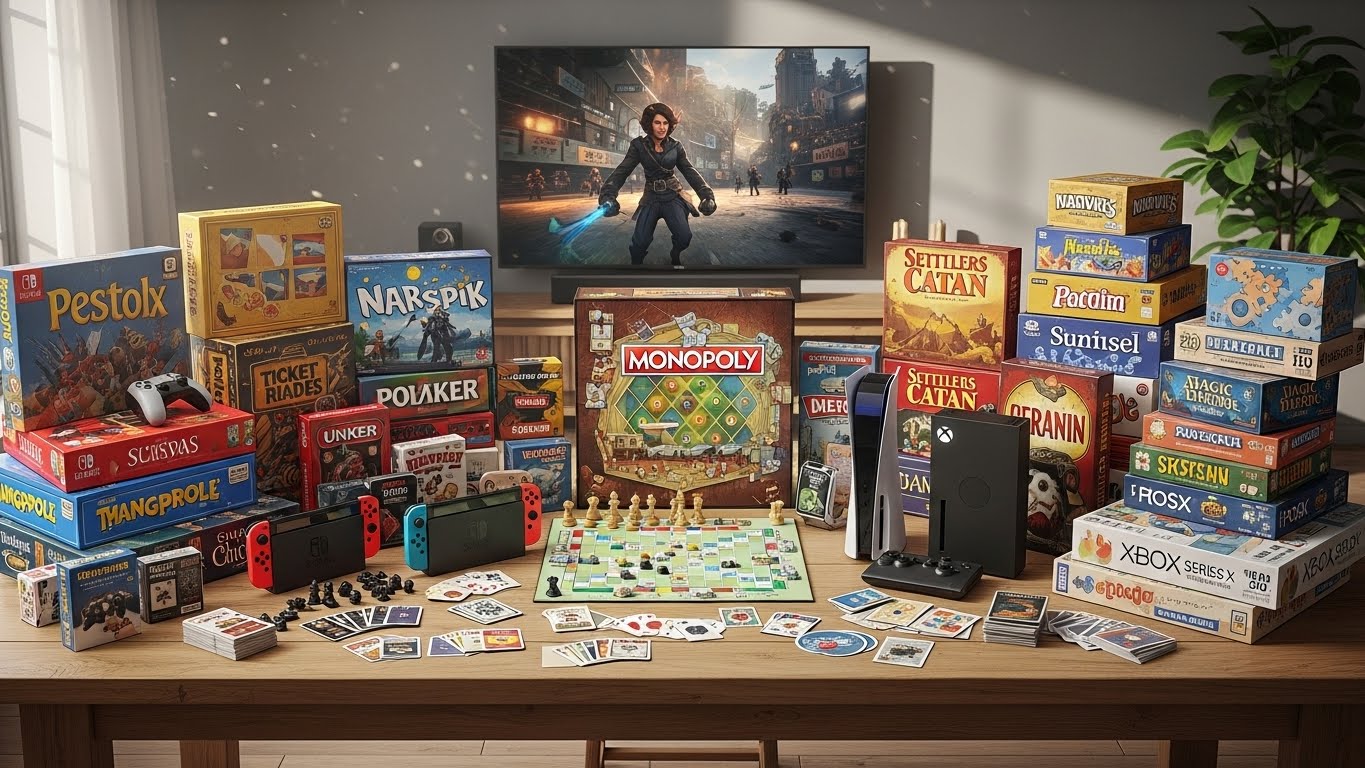
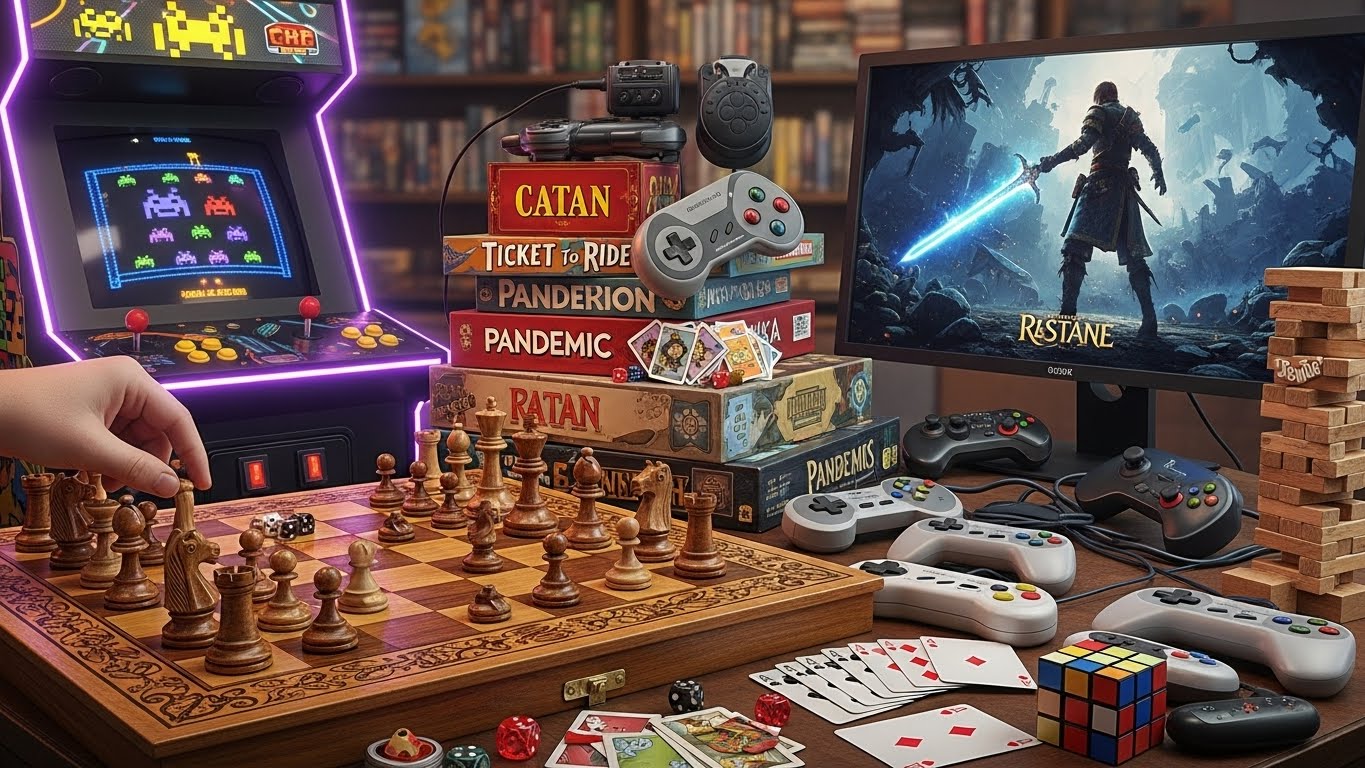
Games have been a central part of human culture for millennia. From the ancient games of kings and peasants to the high-tech, graphically stunning titles of today, games have evolved into a form of entertainment that transcends age, gender, and background. What began as simple activities designed to pass time has blossomed into an enormous multi-billion-dollar industry, influencing everything from technology and art to social behavior and culture. As gaming continues to evolve, the way we play, engage, and experience games also changes, offering new opportunities for both developers and players. In this post, we will explore the journey of games, from their humble origins to their present-day impact, and delve into the innovations that continue to shape the gaming landscape.
The Origins of Games: Simple Yet Engaging Beginnings
Long before video games became a global phenomenon, people engaged in a variety of games using physical objects, dice, and playing cards. Ancient civilizations had their own versions of games designed to teach strategy, foster competition, and provide entertainment. For instance, the Egyptians played a game called Senet, dating back to around 3100 BC, while the Greeks enjoyed Petteia, a strategy game resembling chess.
The concept of games has always been tied to social interaction. They allowed people to come together, compete, or collaborate, while also serving as a form of cultural expression. The introduction of board games and card games provided a new dimension to entertainment, focusing on strategic thinking, memory, and luck.
The rise of competitive games, particularly in the late 19th and early 20th centuries, led to the creation of more structured games, many of which are still popular today. Games like chess and checkers continued to be enjoyed for their tactical depth, while others such as Monopoly or Scrabble became family staples, encouraging socialization and friendly rivalry.
The Birth of Video Games: From Pixels to Pop Culture
Video games as we know them today trace their roots back to the early 20th century when innovators began experimenting with computer technology. The first video game, Tennis for Two, was created in 1958 by physicist William Higinbotham. Though simplistic by today’s standards, it was the first time that a computer-generated graphical interface was used for interactive entertainment. However, it wasn’t until the early 1970s with the release of Pong, created by Atari’s Nolan Bushnell, that video games began to gain widespread attention.
Pong was a simple table tennis simulation, but its appeal was undeniable. It was the first commercial success of an arcade game, paving the way for future arcade gaming. The 1970s and early 1980s saw a boom in arcade gaming, as people flocked to amusement arcades to play games like Space Invaders, Pac-Man, and Donkey Kong. These games were based on simple concepts but featured a level of challenge and competitiveness that kept players coming back for more.
As arcade gaming exploded in popularity, home gaming systems began to emerge. The Atari 2600, released in 1977, was the first major home video game console, enabling people to play video games at home. It was a turning point in the evolution of gaming, making the medium more accessible and laying the foundation for future consoles like the Nintendo Entertainment System (NES), which would go on to redefine the gaming industry.
The 8-Bit Era: Shaping the Foundations of Modern Gaming
The 1980s marked a golden age for gaming, with the introduction of home consoles and iconic game franchises. The launch of the NES in 1985 changed the gaming landscape forever. It was the first console to feature 8-bit graphics, offering a vast library of games with more advanced gameplay compared to the earlier Atari systems.
Games like Super Mario Bros., The Legend of Zelda, and Metroid defined this era and set the stage for the future of gaming. These games introduced players to rich worlds full of adventure, exploration, and puzzle-solving. The NES was also instrumental in introducing players to the concept of game progression and storytelling, elements that would become standard in future titles.
Meanwhile, other companies like Sega were busy developing their own systems to compete with Nintendo. The Sega Genesis (Mega Drive) arrived in 1988 and brought with it the beloved Sonic the Hedgehog series, adding a new dimension to platformers with fast-paced gameplay and colorful graphics. The rivalry between Nintendo and Sega, dubbed the “Console Wars,” became a defining feature of the 1990s, with both companies constantly trying to outdo each other with new technology and innovative games.
The Rise of 3D Gaming: A New Era of Immersion
As gaming technology progressed into the 1990s, the transition from 2D to 3D graphics marked a significant milestone in the development of games. The introduction of 3D technology allowed for more immersive and complex environments, taking gameplay to new heights. The early 1990s saw the release of consoles like the Sony PlayStation and the Nintendo 64, which featured groundbreaking 3D capabilities.
The PlayStation, launched in 1994, changed the way people thought about gaming. It introduced a new generation of 3D games that would become benchmarks in the industry. Final Fantasy VII is one such game that redefined role-playing games (RPGs), featuring cinematic storytelling, expansive worlds, and complex characters. Similarly, Metal Gear Solid demonstrated the potential of 3D graphics, blending stealth, action, and narrative in ways never seen before.
The Nintendo 64, released in 1996, also pushed the boundaries of what was possible with 3D games. Super Mario 64 and The Legend of Zelda: Ocarina of Time became instant classics, offering expansive open-world exploration and dynamic gameplay mechanics that had never been experienced on a home console.
3D gaming didn’t just impact the visuals—it also changed how players interacted with the games. It gave rise to new genres like first-person shooters (FPS), where games like GoldenEye 007 and Halo revolutionized multiplayer gameplay and competitive gaming. The technology behind 3D graphics and the power of consoles like the PlayStation and Nintendo 64 set the stage for the next wave of gaming innovations.
Online Gaming and the Digital Revolution
The late 1990s and early 2000s brought a revolutionary shift in how games were played. The rise of the internet and broadband connections allowed for online multiplayer experiences, opening up new social and competitive possibilities. Games like StarCraft, Counter-Strike, and World of Warcraft were some of the first to leverage online connectivity, offering players the chance to compete or cooperate with others from around the world.
Online gaming evolved quickly in the 2000s with consoles like the Xbox and PlayStation introducing online services that allowed players to connect and play with friends and strangers alike. Xbox Live, launched in 2002, brought online multiplayer gaming to consoles in a big way, offering voice chat, matchmaking, and downloadable content (DLC).
The rise of online gaming also led to the growth of esports, where competitive gaming became a professional sport with tournaments and global championships. Games like League of Legends, Dota 2, and Counter-Strike: Global Offensive now draw millions of viewers to online broadcasts and live events, establishing esports as a major component of the gaming industry.
The Mobile Gaming Boom: Games Everywhere
In the 2010s, the rise of smartphones completely transformed the gaming industry. Mobile gaming became a global phenomenon, reaching a massive audience that didn’t necessarily identify as “gamers” in the traditional sense. Games like Angry Birds, Candy Crush Saga, and Clash of Clans became instant hits, offering casual, easy-to-play experiences that could be enjoyed in short bursts.
The accessibility of mobile gaming meant that people could now play games anywhere and at any time. Whether it was a five-minute session during a commute or an hour-long session at home, mobile games offered a convenience that traditional gaming platforms couldn’t match. The rise of app stores also allowed indie developers to create and release their own games, further democratizing the industry.
In addition to traditional puzzle and strategy games, mobile gaming introduced augmented reality (AR) games like Pokémon Go, which merged the real world with the digital world. AR games became a major trend, offering innovative ways to experience games and interact with the environment.
Virtual Reality and the Future of Gaming
As we move into the next phase of gaming, virtual reality (VR) is emerging as one of the most exciting frontiers in the industry. VR technology offers players an immersive, 360-degree experience that puts them directly inside the game world. With devices like the Oculus Rift, HTC Vive, and PlayStation VR, players can now experience fully interactive environments where they can move, touch, and interact with digital objects in a way that was previously only imagined.
VR is still in its early stages, but it has already shown immense potential in both gaming and other industries such as education and healthcare. As VR technology continues to improve, we can expect games that are even more immersive, with lifelike graphics, haptic feedback, and voice-controlled interactions.
Alongside VR, augmented reality (AR) is also set to play a huge role in gaming’s future. Games like Pokémon Go have demonstrated how AR can blend digital and real-world elements, and as AR technology advances, more games will be able to offer players an experience that feels deeply integrated into the real world.
Conclusion: Gaming’s Endless Future
From simple dice games to sprawling virtual worlds, the evolution of games has been an incredible journey. What started as a form of entertainment designed to bring people together has evolved into a multi-faceted, interactive medium that combines technology, art, and storytelling in new and exciting ways.
As gaming technology continues to advance,