Introduction: The Universal Language of Play
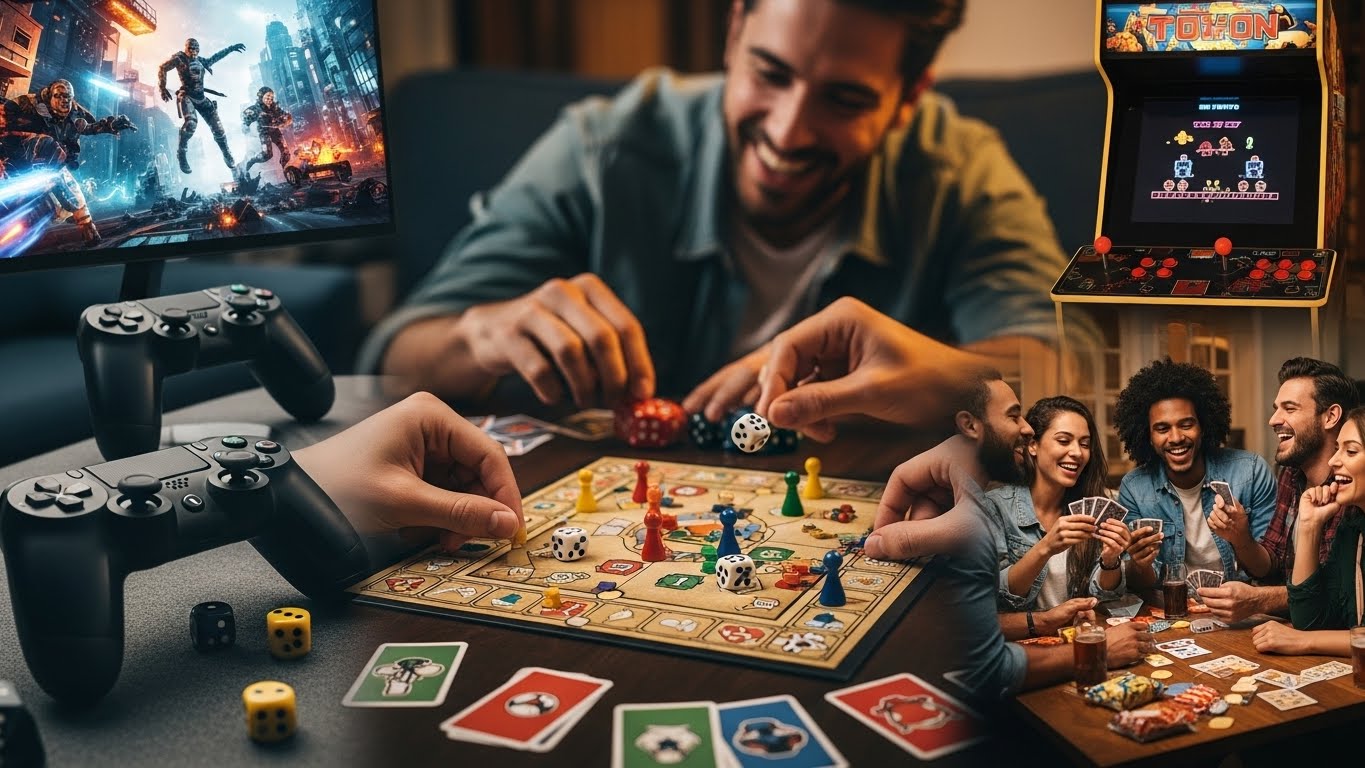
Games have existed for as long as humanity itself. From ancient civilizations tossing carved stones to the modern-day digital universes explored through screens, games have been a central part of how people learn, compete, and connect. They reflect culture, creativity, and curiosity, blending art with science and strategy with spontaneity. Whether played on a dusty field, a polished board, or a glowing console, games carry the same fundamental purpose—to entertain, engage, and challenge the human mind.
In every corner of the world, the spirit of gaming thrives. Children create make-believe worlds in their backyards, adults dive into strategic contests of skill, and entire communities bond over shared experiences. Games have evolved, but their essence remains timeless. They continue to shape how we think, communicate, and dream.
The Origins of Games: From Ancient Rituals to Modern Pastimes
Long before video games, before sports stadiums and competitive leagues, games were a part of daily life. Archaeologists have discovered ancient gaming artifacts in Egypt, Mesopotamia, and China that date back thousands of years. The Royal Game of Ur, for example, is one of the earliest known board games, and it served not only as entertainment but also as a reflection of religious and social beliefs.
In ancient Greece, games were often tied to worship and celebration. The Olympic Games, which began in 776 BC, were as much about honoring the gods as they were about physical prowess. Meanwhile, in ancient China, games like Go and Liubo were played to sharpen intellect and social interaction. Across Africa and the Americas, traditional games taught survival skills and community values.
What all these ancient traditions share is the idea that games were never trivial. They were a way to express human emotion, intellect, and cooperation. Even as societies evolved, the fundamental reasons for playing remained the same—people sought joy, competition, and connection.
The Rise of Physical Sports and Competitive Spirit
As civilization progressed, physical games grew into organized sports. Running, wrestling, archery, and team-based challenges became integral to cultural identity. Sports offered not just entertainment but also a platform to test endurance, discipline, and teamwork.
The structured nature of sports introduced the concept of fair play and rules. The thrill of victory and the agony of defeat became shared experiences that transcended language and geography. Over time, sports like football, cricket, basketball, and tennis evolved from simple games to global phenomena, uniting billions of fans across the planet.
Sports also became symbols of national pride and unity. Major tournaments inspired generations, creating heroes whose achievements lived on in memory and legend. The athletic field became a stage where human limits were tested and redefined.
The Birth of Modern Board and Card Games
As society urbanized, new forms of entertainment emerged within the home. Board games and card games gained popularity during the 18th and 19th centuries. Chess, already an ancient strategy game, became a symbol of intellectual excellence. Games like checkers, backgammon, and later Monopoly and Scrabble brought friends and families together for friendly rivalry and laughter.
Each board game reflected different aspects of human nature. Strategy games sharpened logic, luck-based games mirrored the unpredictability of life, and cooperative games taught teamwork and problem-solving. These analog experiences still hold a special place today, even in the age of digital screens.
Card games, too, had a universal appeal. Whether it was poker at a casino or bridge in a quiet living room, the shuffle of cards represented mystery, skill, and chance. The social aspect of these games turned simple evenings into moments of connection and shared fun.
The Digital Revolution: Birth of Video Games
The 20th century marked a turning point in gaming history. The invention of computers and consoles introduced a completely new world of play—the digital realm. Early video games like Pong and Space Invaders may seem simple by today’s standards, but they laid the foundation for an industry that would grow into one of the largest in the world.
In the 1980s and 1990s, video games evolved rapidly. Companies like Nintendo, Sega, and Sony transformed homes with consoles that offered immersive experiences. Games like Super Mario, The Legend of Zelda, and Sonic the Hedgehog became cultural icons, shaping childhoods and inspiring imagination across generations.
What made video games so revolutionary was their ability to combine storytelling, interactivity, and art. Players were no longer just spectators—they became part of the story. The challenge of mastering a level, the satisfaction of solving a puzzle, or the emotion of witnessing a game’s ending created an entirely new kind of emotional experience.
The Expansion of Genres and Player Freedom
As technology advanced, video games diversified. Action games tested reflexes, strategy games challenged intellect, role-playing games invited players to live other lives, and simulation games mirrored reality. There was something for everyone—from casual gamers seeking relaxation to competitive players craving intensity.
The introduction of 3D graphics, open-world environments, and online multiplayer modes completely changed how people interacted with games. Titles like Grand Theft Auto, Minecraft, and The Sims offered creativity and exploration without limits. Meanwhile, competitive games like Counter-Strike, Dota, and League of Legends built massive online communities.
The beauty of modern gaming lies in its inclusivity. There are no strict boundaries of age, gender, or background. Games today are playgrounds for everyone, where creativity and strategy meet freedom and individuality.
The Emotional Power of Games
One of the most overlooked aspects of games is their emotional depth. Beyond action and excitement, many games tell stories that rival the greatest novels or films. Titles like The Last of Us, Journey, and Red Dead Redemption 2 explore love, loss, hope, and redemption with stunning realism.
Games are interactive art. They allow players to feel empathy by putting them in the shoes of others. They evoke laughter, fear, sadness, and wonder—all through choices and participation. A well-designed game doesn’t just tell a story; it lets you live one.
Moreover, games can be therapeutic. They provide comfort, distraction, and purpose to those struggling with stress or isolation. During difficult times, many people turn to games for a sense of accomplishment and connection that reality sometimes fails to provide.
The Rise of Esports and Professional Gaming
What was once considered a pastime is now a career for many. The rise of esports has turned gaming into a professional industry, complete with tournaments, sponsorships, and global fanbases. Millions of viewers watch competitive matches of games like Fortnite, Valorant, and League of Legends, cheering for their favorite players and teams.
Esports represents the perfect blend of skill, strategy, and teamwork. It challenges outdated perceptions of gaming as mere recreation. Just like athletes train their bodies, professional gamers train their minds and reflexes. The competitive gaming world has proven that digital sports can be just as thrilling and demanding as physical ones.
The success of esports also demonstrates how games can unite people across borders. Players from different countries compete on equal footing, showing how technology has made the world more connected than ever.
Mobile Gaming and Accessibility
The arrival of smartphones brought gaming into everyone’s hands. Mobile games have democratized the industry, making it possible for anyone, anywhere, to play. Titles like Candy Crush, PUBG Mobile, and Among Us became cultural phenomena, engaging millions of people of all ages.
Mobile gaming’s success lies in its simplicity and accessibility. It transformed waiting rooms, commutes, and quiet evenings into moments of play. Casual gamers found enjoyment in short bursts, while dedicated players discovered complex mobile adventures.
This accessibility also encouraged social gaming. Friends and families could easily connect, compete, or cooperate without special equipment. Games no longer required expensive consoles—just curiosity and a few minutes of free time.
The Artistic Side of Games
Games are now recognized as a legitimate form of art. Every frame, soundtrack, and narrative choice contributes to a holistic experience that can move and inspire. Designers, writers, and composers collaborate to create worlds that feel alive.
Visual design in games rivals that of movies or paintings. From the hand-painted beauty of indie games to the cinematic realism of blockbuster titles, the artistry is undeniable. Music in games, too, enhances emotion and memory. A single melody can instantly transport a player back to a moment of triumph or heartbreak.
Many educators and cultural institutions now view games as tools for creativity and learning. They teach problem-solving, collaboration, and decision-making in ways that traditional media cannot.
Games as a Social Connector
Perhaps the most powerful aspect of games is their ability to bring people together. Multiplayer experiences allow friends to bond despite distance, forming communities that transcend geography and language.
Online gaming has created virtual friendships and even real-life relationships. Players who might never meet in person share laughter, strategy, and support through shared adventures. Games are, in many ways, digital campfires—places where stories are told, teamwork is built, and memories are made.
Even offline, games are a unifying force. Board game nights, sports tournaments, and family competitions foster laughter and understanding. The social nature of games reminds us that, at their core, they are about connection—not isolation.
Challenges in the Gaming World
Despite its many positives, gaming faces challenges. Issues such as addiction, toxicity in online spaces, and over-commercialization can tarnish the experience. Developers and communities are continually working to create safer and healthier environments.
Another challenge is representation. For years, games lacked diversity in characters and stories. Thankfully, this is changing as more creators strive to reflect real-world variety and inclusivity. The industry is learning that everyone deserves to see themselves as heroes in the worlds they explore.
Balancing innovation with responsibility is key. As technology advances, ethical questions about virtual reality, data privacy, and AI-driven gaming experiences arise. The future of gaming depends on addressing these issues thoughtfully.
The Future of Games: Beyond Reality
The next frontier of gaming is even more exciting. Virtual reality (VR) and augmented reality (AR) are creating experiences that blur the line between the real and digital worlds. Players can now step inside their favorite universes, feeling presence and immersion like never before.
Artificial intelligence is also shaping the future of gaming. Smarter non-player characters, adaptive storytelling, and procedurally generated worlds ensure that no two playthroughs are ever the same.
Cloud gaming promises accessibility, allowing anyone to play high-quality games without expensive hardware. Combined with faster internet and global connectivity, it will make gaming truly universal.
In the coming decades, games will continue to evolve as both art and technology. They will educate, heal, entertain, and inspire in ways humanity is only beginning to understand.
Conclusion: Why Games Matter
Games are far more than distractions or hobbies—they are a reflection of who we are. They capture our need for challenge, creativity, and connection. They remind us that life itself is a kind of game, filled with goals, risks, rewards, and endless learning.
From ancient stones to virtual worlds, the journey of games mirrors human evolution. Every generation adds new dimensions, but the heart of gaming remains the same: joy, imagination, and togetherness. Whether we play for fun, for competition, or for self-expression, games remind us of the simple truth that play is essential to being human.
The story of games will never truly end—it will only evolve, just as we do.