Video games have come a long way from their early days of simple mechanics and pixelated graphics. What began as an experiment in interactive entertainment has transformed into a dynamic, global industry that shapes culture, technology, and even social interactions. With millions of players worldwide, the gaming world is constantly evolving, offering fresh experiences, new challenges, and cutting-edge technology. In this post, we’ll take a deep dive into the world of video games, exploring their evolution, trends that are currently shaping the industry, and what we can expect in the future.
The Birth of Video Games: From Arcades to Home Consoles
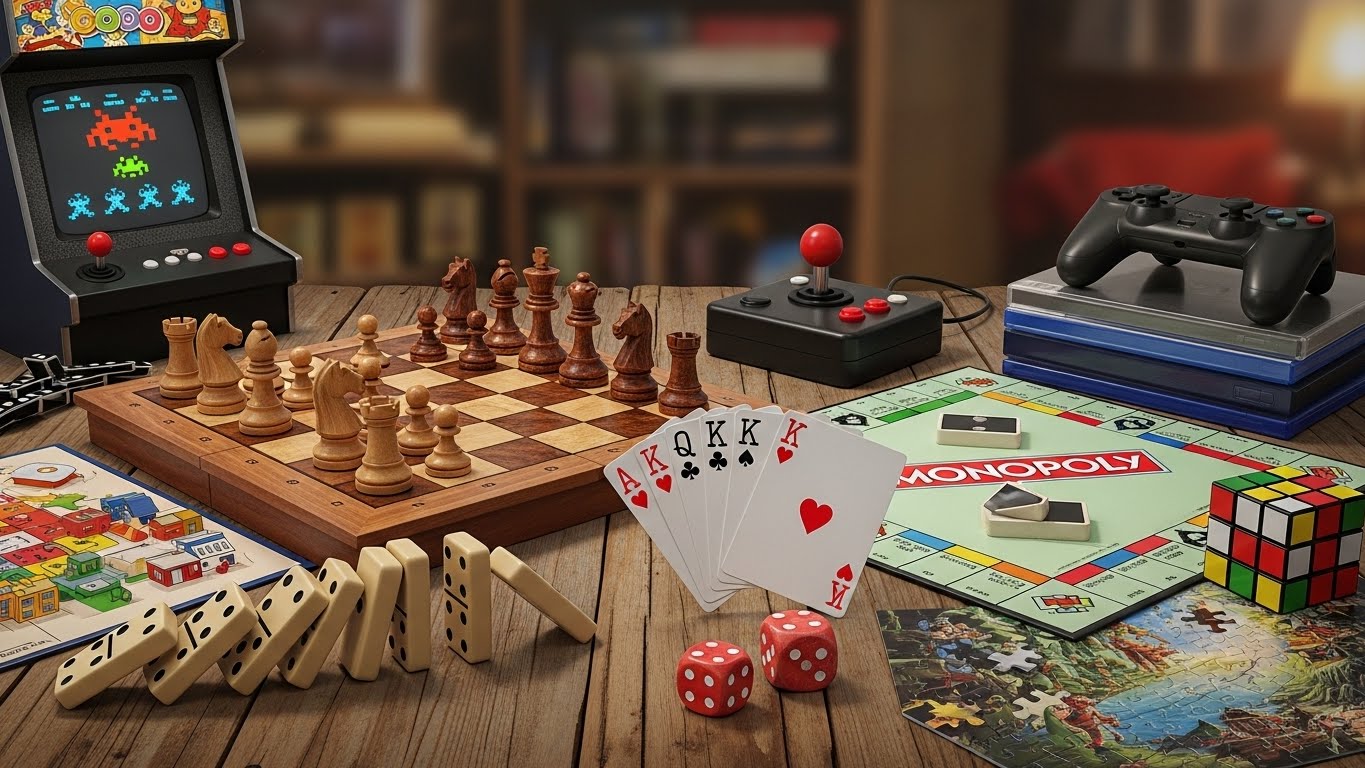
The origins of video games trace back to the 1950s and 60s, when the first computer-based games were designed in university labs for educational purposes. However, it wasn’t until the 1970s and 1980s that gaming truly found its place in pop culture. Early arcade games like Pong and Space Invaders marked the beginning of an era, while the rise of home consoles, such as the Atari 2600 and Nintendo Entertainment System (NES), made gaming accessible to the masses.
This era was defined by simple, easy-to-understand games. While these early video games were far from complex, they laid the foundation for the gaming industry, offering entertainment that was both fun and addictive. Icons like Pac-Man, Super Mario Bros., and Donkey Kong became household names, starting the long-lasting trend of franchises that still dominate the gaming market today.
The Golden Age of 3D: The Leap to Immersive Worlds
The 1990s marked a huge technological leap in the video game industry. With the arrival of the first 3D consoles and games, players were no longer confined to flat, two-dimensional worlds. The PlayStation, Nintendo 64, and Sega Saturn made 3D gaming a reality, giving rise to groundbreaking titles like Super Mario 64, Final Fantasy VII, and The Legend of Zelda: Ocarina of Time.
These games pushed the boundaries of what video games could be, offering rich, expansive environments for players to explore. The sense of immersion that 3D graphics provided allowed players to feel like they were part of the game world, rather than just controlling a character on a screen. It was a defining moment for gaming, laying the groundwork for the complex, visually stunning titles we play today.
The Rise of Online Multiplayer: Changing How We Play Together
One of the most significant shifts in gaming came in the late 1990s and early 2000s, when the internet began to play a crucial role in connecting players. The introduction of online multiplayer games like Diablo II, Halo 2, and World of Warcraft allowed gamers to engage with each other across the globe. This shift created a new type of gaming experience, where players could team up, compete, and socialize in real-time, without ever meeting face-to-face.
Online gaming not only made multiplayer games more accessible but also gave rise to the competitive gaming scene, better known as esports. The growth of esports has been staggering, with major tournaments now drawing millions of viewers and offering prize pools in the millions of dollars. What was once a niche community has transformed into a global industry, with professional players and teams gaining celebrity status.
Mobile Gaming: A Revolution in Accessibility
The rise of smartphones in the late 2000s opened up a new frontier for gaming: mobile gaming. The accessibility of smartphones meant that games could now be played by anyone, anywhere, at any time. Mobile gaming didn’t just reach dedicated gamers—it reached people who had never considered themselves gamers before, thanks to simple, addictive games like Angry Birds, Candy Crush Saga, and Pokémon GO.
Mobile games often feature bite-sized gameplay, allowing players to engage with games in short bursts. This accessibility has led to a massive surge in the number of people who game casually, with mobile gaming now accounting for a significant portion of the gaming market. The success of mobile gaming has prompted major developers and studios to adapt, creating titles that are optimized for touchscreen devices, as well as incorporating freemium models and microtransactions to keep players engaged.
The Emergence of Virtual and Augmented Reality
Virtual reality (VR) and augmented reality (AR) are two technologies that have taken gaming to an entirely new level in recent years. VR, with headsets like the Oculus Rift and PlayStation VR, immerses players in fully realized 3D worlds, where they can physically interact with the environment and experience games like never before. Titles such as Beat Saber and Half-Life: Alyx have showcased the potential of VR, offering a level of immersion that traditional gaming cannot match.
AR, on the other hand, blends the virtual world with the real world, as seen in games like Pokémon GO. While VR has primarily focused on home gaming experiences, AR has brought gaming into the physical world, encouraging players to get outside and explore. Both VR and AR have the potential to revolutionize the gaming industry, though they are still in their early stages, with more advancements expected in the coming years.
Game Streaming and Cloud Gaming: The Future of Access
One of the most exciting trends in gaming right now is the rise of game streaming and cloud gaming services. Platforms like Google Stadia, Xbox Cloud Gaming, and Nvidia GeForce Now allow players to stream high-quality games to their devices without the need for expensive hardware. This is particularly exciting for people who might not be able to afford a high-end gaming PC or console, as it opens up access to AAA games on even modest devices like smartphones or laptops.
Cloud gaming eliminates the need to download large game files or invest in powerful machines, making it easier for players to dive into games instantly. As internet speeds continue to improve globally, it’s expected that cloud gaming will become more widespread, allowing for seamless, high-quality gaming experiences anywhere with a reliable connection.
The Future: Artificial Intelligence, Blockchain, and More
As technology continues to evolve, the future of gaming is incredibly exciting. One area that could see significant growth is artificial intelligence (AI). AI can be used to create more dynamic and responsive game worlds, where NPCs (non-playable characters) react intelligently to player actions. Additionally, AI could play a role in creating procedurally generated worlds, offering near-endless variations of gameplay that keep players coming back for more.
Another futuristic development could come from blockchain technology. Games built on blockchain can allow for true ownership of in-game assets, including skins, weapons, and even entire virtual lands. This could create new possibilities for monetization and player-driven economies, as well as introduce more transparency into the world of in-game transactions.
Finally, there’s the potential for even greater immersion with advancements in haptic feedback, motion controls, and perhaps even neural interfaces. The idea of fully immersing ourselves in a game world is closer than ever before, with developments in technology pushing the boundaries of what we once thought possible.
Conclusion: Gaming’s Endless Potential
The video game industry is in a constant state of flux, with each new technological advancement opening up new possibilities for creativity, gameplay, and player interaction. From its humble beginnings in arcades to its current status as a global cultural force, gaming has evolved into something far more than a hobby—it’s a vibrant industry that continues to innovate and push the boundaries of what entertainment can be.
As we look to the future, there’s no telling where gaming will go next. What’s clear is that it will continue to evolve, offering new experiences that captivate players and bring people together in ways we never imagined. The future of gaming is bright, and the best is yet to come.