
Gaming is not merely a pastime; it is a culture, an industry, and a phenomenon that has shaped the way we socialize, compete, and experience stories. From the early days of arcade machines to the immersive virtual worlds we can now explore on next-gen consoles, gaming has undergone a remarkable transformation. This blog will explore the evolution of video games, the impact they’ve had on society, the rise of eSports, and where the future of gaming is headed.
The Humble Beginnings: Early Games and the Birth of an Industry
The origins of gaming trace back to the mid-20th century, when the idea of interactive entertainment began to take shape. The first widely recognized video game, Tennis for Two, was created in 1958 by physicist William Higinbotham. Though simple by today’s standards, this two-player game, displayed on an oscilloscope, laid the groundwork for interactive entertainment.
The real breakthrough came in 1972 with the launch of Pong, the first commercially successful arcade game created by Atari. Pong was a simple game where players controlled paddles to bounce a ball back and forth, mimicking the game of table tennis. It was an instant hit, leading to the rapid growth of arcades across the globe and marking the birth of video games as an entertainment medium.
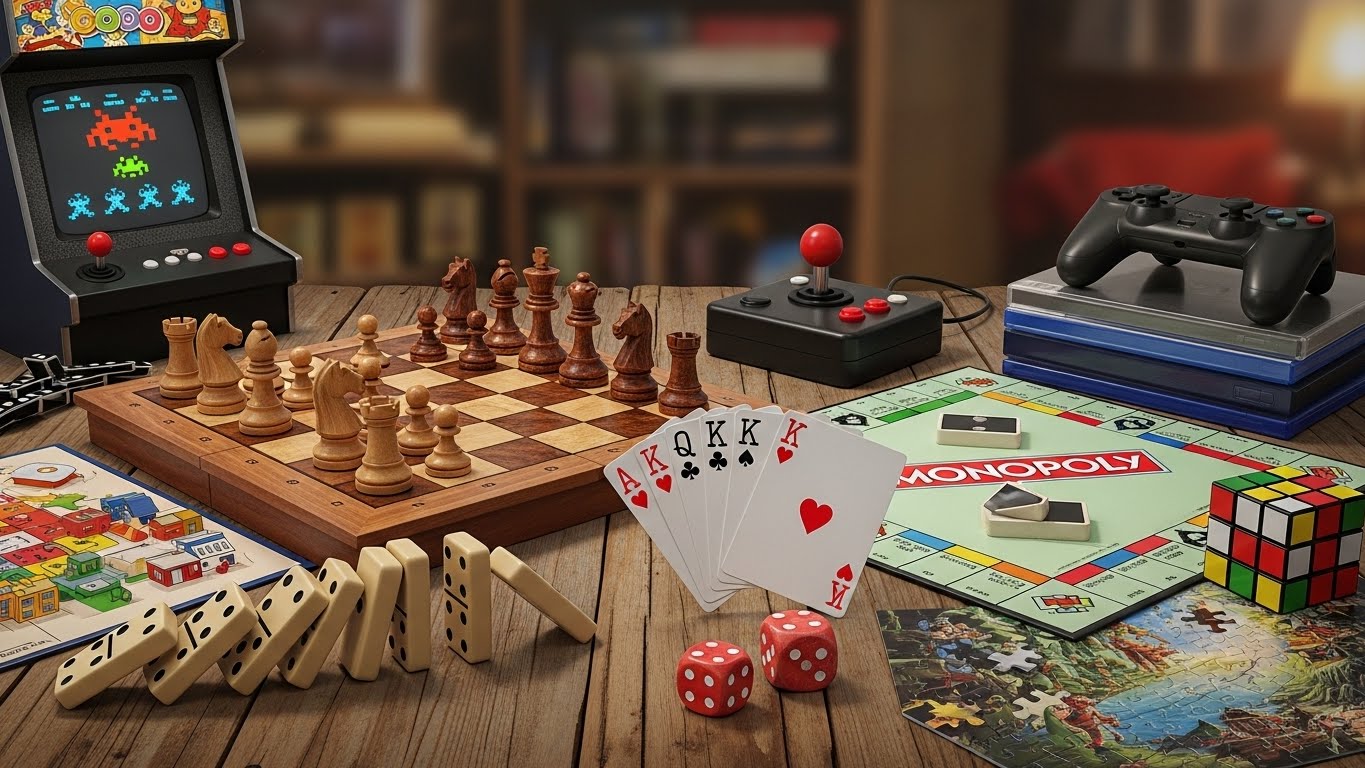
Throughout the late 70s and early 80s, gaming continued to expand with arcade classics like Space Invaders, Pac-Man, and Donkey Kong. These games not only introduced iconic characters and concepts but also established a cultural phenomenon that captured the attention of millions. Gaming became a major form of entertainment for all age groups, laying the foundation for the multibillion-dollar industry it would eventually become.
The Rise of Home Consoles and PC Gaming
As the arcade boom slowed down in the early 80s, the next wave of gaming innovation took place in the home. In 1985, Nintendo launched the Nintendo Entertainment System (NES), a revolutionary home console that would become the driving force behind the resurgence of gaming. With iconic titles like Super Mario Bros., The Legend of Zelda, and Metroid, the NES helped establish video games as an integral part of everyday entertainment.
Simultaneously, the personal computer (PC) began to emerge as a viable platform for gaming. The popularity of games like The Oregon Trail in the 1970s and Doom in the 1990s showed that PC gaming had the potential to rival consoles in terms of performance and storytelling. The addition of a mouse and keyboard to a personal computer opened the doors for more complex games, such as strategy games and first-person shooters, giving players a level of control and immersion that was previously unavailable.
The 90s also saw the rise of Sony’s PlayStation, which was launched in 1994 and quickly became a dominant force in the gaming world. Titles like Final Fantasy VII, Gran Turismo, and Metal Gear Solid helped cement PlayStation as a powerhouse in the gaming industry. The PlayStation’s success, along with the increasing popularity of the PC gaming market, demonstrated that there was a growing demand for more immersive and complex gaming experiences.
The Transition to 3D and Online Gaming
As technology advanced, so did the capabilities of gaming consoles and PCs. The 1990s and early 2000s marked the shift from 2D to 3D gaming, transforming everything from gameplay mechanics to visual storytelling. The introduction of the Sony PlayStation 2, released in 2000, and the Microsoft Xbox, released in 2001, represented a new generation of consoles that could render 3D environments in real-time.
Games like Grand Theft Auto III, Halo: Combat Evolved, and The Legend of Zelda: Ocarina of Time helped push the boundaries of what was possible in terms of game design, offering expansive open worlds, dynamic storytelling, and multiplayer modes that allowed players to interact with one another over the internet. This era also saw the rise of massively multiplayer online role-playing games (MMORPGs) like World of Warcraft, which became a cultural phenomenon, bringing millions of players together to explore virtual worlds and engage in epic battles.
The introduction of online gaming was one of the most important milestones in the history of video games. No longer limited to local multiplayer modes, gamers could now compete, cooperate, and socialize in real-time with others across the globe. This gave birth to the concept of the “gaming community,” where players could share strategies, form clans, and even make lasting friendships, all within the virtual world.
The Era of Mobile Gaming and Casual Players
In the mid-2000s, gaming underwent another massive transformation with the advent of smartphones. As mobile phones became more powerful, gaming on these devices exploded in popularity. Simple, casual games like Angry Birds, FarmVille, and Candy Crush Saga attracted millions of players who were not traditionally interested in gaming. These games, often free-to-play and accessible to anyone with a smartphone, became a new gateway for people of all ages to engage with interactive entertainment.
Mobile gaming’s accessibility changed the gaming demographic. What was once a hobby for enthusiasts or young people became a mainstream activity for people of all ages, backgrounds, and interests. The “casual gaming” revolution made it clear that the gaming industry was no longer a niche market—it was a global force with broad appeal.
The Rise of eSports and Streaming Culture
Alongside the growth of mobile gaming, competitive gaming, or eSports, began to gain serious momentum. What was once seen as a hobby for dedicated players grew into a legitimate professional career path. Titles like League of Legends, Dota 2, Counter-Strike: Global Offensive, and Fortnite became staples of eSports tournaments, with players earning millions in prize money and sponsorships.
Platforms like Twitch and YouTube Gaming also played a huge role in the rise of eSports. Streaming, once reserved for niche gamers, became a mainstream activity. Gamers could now broadcast their gameplay, attract audiences, and even interact with fans in real-time. Streaming personalities like Ninja, PewDiePie, and Pokimane have turned their gaming talents into lucrative careers, with millions of subscribers and sponsorship deals with major brands.
In fact, the growth of eSports has turned competitive gaming into a global phenomenon. Tournaments like The International for Dota 2, League of Legends Worlds, and The Fortnite World Cup are broadcast to millions of viewers, filling arenas with spectators who cheer on their favorite teams and players. eSports has become more than just a competitive activity—it is now a global spectacle that rivals traditional sports in terms of audience size and excitement.
Virtual Reality (VR) and Augmented Reality (AR): The Next Frontier of Gaming
As we look ahead, the future of gaming is tied to new, cutting-edge technologies that promise to redefine how we experience interactive entertainment. Virtual Reality (VR) and Augmented Reality (AR) are at the forefront of this revolution.
Virtual reality allows players to step into fully immersive digital environments, where they can explore worlds, interact with characters, and experience stories in ways that were previously unimaginable. VR headsets like the Oculus Rift, HTC Vive, and PlayStation VR have opened the door to a new type of gaming experience, where players feel physically present within the game world. Games like Beat Saber, Half-Life: Alyx, and No Man’s Sky VR demonstrate the potential of VR, offering experiences that blur the line between reality and the digital world.
On the other hand, Augmented Reality (AR) superimposes digital elements onto the real world. Games like Pokémon Go and Harry Potter: Wizards Unite have used AR to create interactive, location-based experiences, where players can explore their surroundings and interact with virtual objects and characters.
While VR and AR are still in their early stages, their potential to change the gaming landscape is immense. The integration of these technologies into gaming will undoubtedly lead to even more innovative experiences, from virtual theme parks to multiplayer games that span both the real and virtual worlds.
The Future of Gaming: A Convergence of Technologies
The future of gaming is incredibly exciting, with a convergence of new technologies shaping the direction of the industry. Cloud gaming, for example, allows players to stream games directly from the cloud without needing expensive hardware. This means that anyone with a stable internet connection could play high-quality games on their smartphone, tablet, or laptop without the need for a powerful gaming console or PC.
AI-powered game design is also on the horizon, where artificial intelligence is used to create smarter NPCs (non-playable characters) and dynamic, evolving game worlds. This could lead to games where no two playthroughs are the same, offering a deeper and more personalized gaming experience.
Additionally, the rise of social gaming platforms will further blur the lines between gaming, socializing, and entertainment. Virtual spaces where players can hang out, attend virtual concerts, and even watch movies together will become more common, leading to a more interconnected and immersive social gaming experience.
Conclusion: A Universe of Possibilities
The world of gaming is vast, dynamic, and ever-evolving. What started as simple, pixelated games has grown into an immersive industry that spans across genres, technologies, and platforms. The social and cultural impact of gaming is undeniable, with millions of people around the world engaging in this form of entertainment every day.