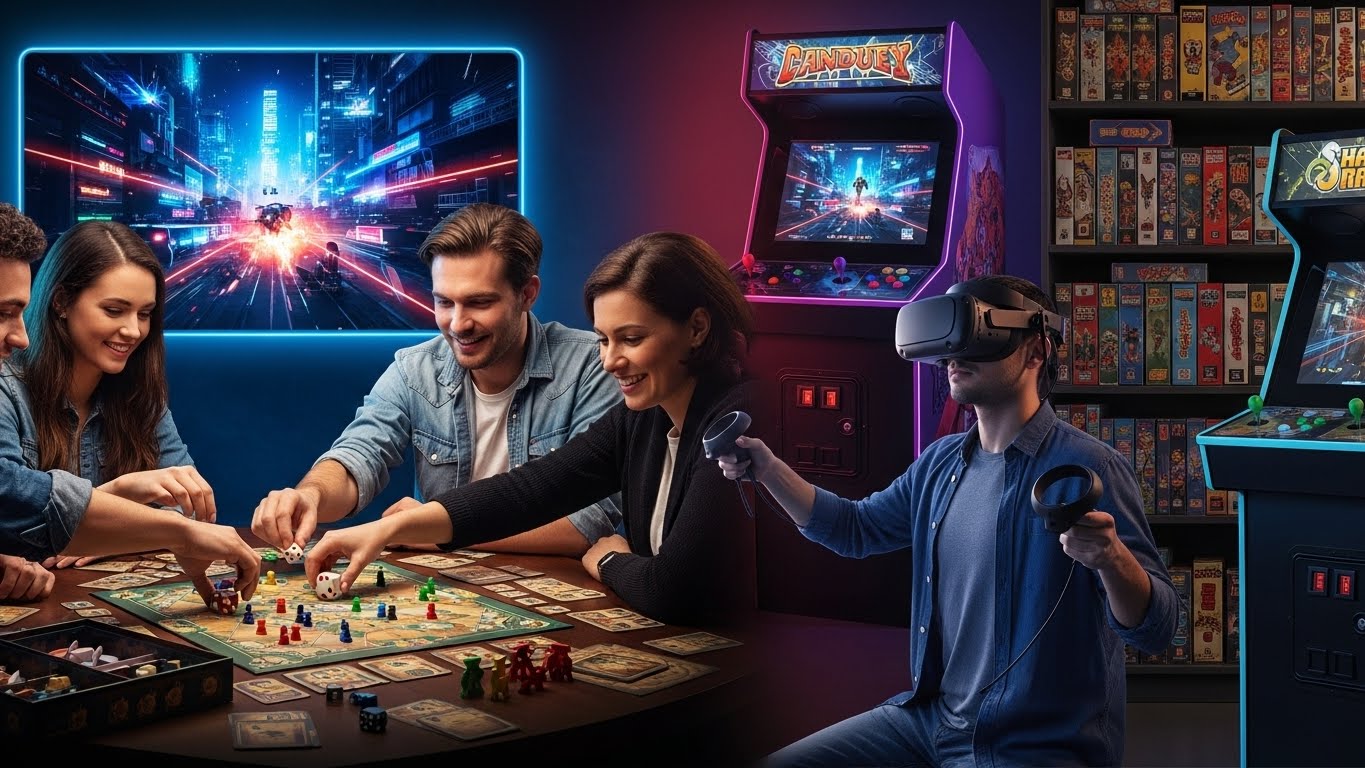

Games have been part of human culture since the earliest days of civilization. From ancient board games carved into stone to modern digital adventures rendered in lifelike graphics, games have constantly evolved alongside human creativity and technology. Today, games are more than just entertainment; they are tools for learning, platforms for social connection, and even means of self-expression. This blog explores the vast and diverse world of games, their history, their impact, and the reasons they continue to captivate people of all ages.
The Ancient Roots of Gaming
Long before the invention of computers or consoles, humans played games to pass time, build strategy, and strengthen social bonds. Games like Senet in ancient Egypt, Go in China, and Chess in India were not just pastimes but reflections of culture and intellect. These early games were simple in design yet complex in strategy, requiring patience, foresight, and skill.
Board games served as a window into society’s values. Many ancient games symbolized spiritual journeys, warfare, or life’s moral choices. While technology has changed the ways we play, these early creations remind us that the desire to engage, compete, and imagine is deeply rooted in human nature.
The Birth of Modern Gaming
Modern gaming began to take shape in the early 20th century with the rise of popular board games like Monopoly, Scrabble, and Clue. These games brought families together around dining tables, creating shared experiences that continue to this day. Their success laid the foundation for play in the modern age, proving that games could be both fun and intellectually stimulating.
In the 1950s and 1960s, the earliest computer games were developed by researchers and hobbyists experimenting with new technologies. Though simple by today’s standards, these early projects sparked the imagination of developers and paved the way for an industry that would eventually become one of the largest entertainment sectors in the world.
The Rise of Video Games
The 1970s and 1980s marked a revolution in gaming with the introduction of arcade machines, home consoles, and personal computers. Games like Pong, Space Invaders, Pac-Man, and Super Mario Bros. brought gaming into mainstream culture. Children, teenagers, and adults flocked to arcades to test their skills and chase high scores, while home consoles allowed families to enjoy games together in living rooms.
This era defined many of the genres we know today, including platformers, shooters, and role-playing games. It also created iconic characters who have remained beloved for generations. Video games transformed from simple pixelated experiences into immersive journeys that could spark the imagination, test dexterity, and bring people together.
The Expansion into 3D Worlds
The 1990s ushered in 3D graphics, allowing developers to create vast worlds with depth, realism, and storytelling potential. Games became more cinematic, with detailed plots and emotional depth. Franchises like The Legend of Zelda, Final Fantasy, and Tomb Raider grew into cultural landmarks.
With improved technology came new types of gameplay. Players could explore open environments, engage in complex battles, or experience interactive stories with branching paths. Gaming became an art form, blending visuals, music, narrative, and design into cohesive experiences that rivaled movies and literature.
Online Gaming and Global Communities
The internet completely transformed gaming by connecting players across the globe. Multiplayer games allowed friends to compete or cooperate regardless of distance, fostering new social interactions. Entire online communities formed around competitive games, strategy discussions, and creative content sharing.
Massively multiplayer online games allowed thousands of players to inhabit the same world, complete quests, and form friendships. Online gaming proved that games were not solitary experiences but social spaces where people could discover shared passions and build long-lasting connections.
Mobile Gaming and Accessibility
The introduction of smartphones made gaming more accessible than ever. People who had never owned a console or computer could now play games with a simple tap on their phones. Mobile games ranged from casual puzzles to sophisticated strategy titles, offering something for every type of player.
This shift democratized gaming, allowing people of all ages and backgrounds to participate. The convenience of mobile gaming also changed daily habits, turning short breaks, commutes, and waiting periods into opportunities for fun and relaxation.
Games as Tools for Learning
Games are no longer seen only as entertainment; they have proven valuable in education and skill development. Educational games help children learn math, science, and language through engaging activities. Strategy games improve problem-solving and critical thinking. Simulations teach real-world skills such as resource management, teamwork, and decision-making.
Even traditional classrooms now use gaming elements to motivate students. This approach, often called gamification, incorporates challenges, rewards, and interactive activities to make learning more dynamic and enjoyable.
The Psychological Benefits of Gaming
Contrary to outdated stereotypes, many studies show that games can support mental health and cognitive development. Puzzle and strategy games enhance memory, logic, and focus. Adventure and story-driven games can provide emotional release or comfort during difficult times. Multiplayer games create social bonds that reduce loneliness and build a sense of belonging.
Gaming also encourages creativity. Many games allow players to design characters, build worlds, or solve problems in imaginative ways. This blend of creativity and challenge makes gaming one of the most mentally stimulating forms of recreation.
The Artistic Side of Games
Today, games are widely recognized as a form of art. They combine visual design, music composition, storytelling, and interactivity in ways unmatched by any other medium. Developers craft entire worlds with unique atmospheres, cultures, and histories. Narrative-driven games explore complex emotions, characters, and themes, making players active participants in the story.
Music in games can be deeply memorable, enhancing emotional moments and creating lasting impressions. From epic orchestral scores to subtle ambient tracks, game soundtracks have become celebrated components of the overall experience.
The Global Industry and Its Growth
The gaming industry has grown into a global powerhouse, surpassing many traditional entertainment sectors. It supports millions of jobs, from developers and designers to writers, artists, marketers, and voice actors. Gaming conventions attract huge crowds, showcasing new technologies, creative ideas, and innovations.
Independent developers have also flourished, bringing fresh perspectives and inventive game concepts. These creators prove that passion and creativity are just as important as big budgets, resulting in some of the most original and heartfelt gaming experiences.
Challenges Faced by the Gaming World
Despite its success, the gaming industry faces several challenges. The pressure on developers to meet deadlines can lead to stressful work environments. Access to quality gaming hardware can be expensive, limiting opportunities for some players. Toxic behavior in online communities is another concern, prompting developers and platforms to seek better moderation tools.
Balancing screen time, especially for younger players, remains an ongoing discussion among parents and educators. While games can be beneficial, maintaining healthy habits is essential for overall well-being.
The Future of Games
The future of gaming promises even more innovation. Virtual reality and augmented reality are creating immersive experiences that blur the line between the real and digital worlds. Cloud gaming allows players to enjoy high-quality games without expensive hardware. Artificial intelligence is enabling smarter and more responsive game worlds.
Interactive storytelling continues to evolve, letting players shape outcomes through their choices. As technology progresses, games will become even more intuitive, realistic, and emotionally engaging. They may also play larger roles in education, fitness, therapy, and professional training.
Why Games Will Always Matter
Games connect people, challenge minds, and ignite imagination. They offer moments of escape, joy, and discovery. They teach valuable skills such as patience, strategy, perseverance, and collaboration. Whether played alone or with others, games provide experiences that stay with us long after the screen is turned off.
From ancient board games to futuristic virtual adventures, the world of games continues to evolve, reflecting humanity’s creativity and desire for play. As long as people seek fun, challenge, and connection, games will remain an essential and cherished part of our lives.