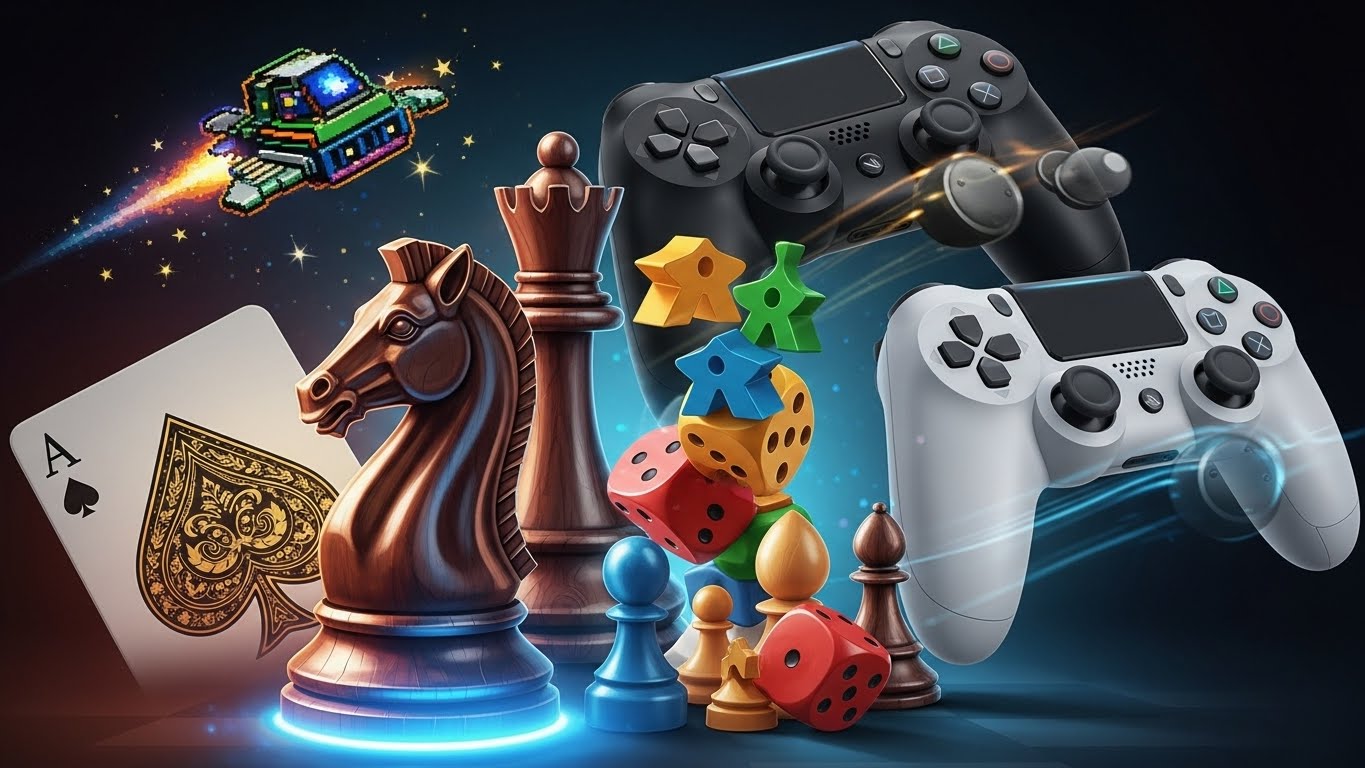
Gaming has undergone a massive transformation over the past few decades. From the days of simple pixelated arcade games to the immersive, cinematic experiences we enjoy today, the world of gaming has evolved in ways that most couldn’t have imagined. This blog will explore the history, growth, and impact of video games, diving into key milestones, technological advancements, and how gaming has influenced culture on a global scale.
The Birth of Gaming: From Pongs to Pixels
The history of gaming dates back to the 1950s and 1960s, though it wasn’t until the early 1970s that it truly began to take form. In 1972, Atari’s Pong hit the arcades, offering the first commercially successful video game. Simple by today’s standards, Pong featured a black-and-white screen where players controlled paddles to bounce a ball back and forth, similar to table tennis. Despite its simplicity, Pong was a groundbreaking concept that captured the attention of the public and set the foundation for the future of gaming.
However, the development of video games was not solely about entertainment. Early video games were also seen as tools for research and education. Spacewar! (1962), developed by Steve Russell at MIT, was one of the first video games designed for computer use, creating an early example of how games could be created and played on a computer system. But it wasn’t until the 1970s that gaming truly entered the mainstream.
The Rise of Arcade Games and the Golden Age
The 1980s marked the golden age of arcade gaming, where arcades became hubs of social activity for many teenagers and young adults. Popular games like Pac-Man, Donkey Kong, and Galaga captivated players around the world. Pac-Man, for instance, became a cultural icon, introducing characters and gameplay mechanics that are still relevant today.
This era was marked by the introduction of colorful graphics, catchy soundtracks, and new genres of gameplay. While many games were relatively simple, they were addictive and offered a sense of challenge. Players were often competing for high scores, leading to a competitive community of gamers who bonded over their shared love of gaming.
The arcade boom, however, was short-lived. By the mid-1980s, home consoles were starting to take over. Players no longer had to go to arcades to enjoy their favorite games; they could play them in the comfort of their homes. The shift from arcade to home consoles marked the beginning of a new era for gaming.
The Birth of Home Consoles: A Revolution in Accessibility
In the early 1980s, home consoles like the Atari 2600 began to gain traction. These consoles allowed gamers to play their favorite titles on their television screens, eliminating the need for arcade visits. The Atari 2600 was followed by the release of other iconic consoles, such as the Nintendo Entertainment System (NES), which solidified the home gaming experience for millions.
The release of the NES in 1985 marked a significant milestone in gaming history. It was a powerhouse for its time, introducing a library of memorable games like Super Mario Bros., The Legend of Zelda, and Metroid. These games not only defined their respective franchises but also introduced new mechanics and storytelling techniques that would shape the future of video games.
One of the most significant aspects of the NES era was its emphasis on game design. Unlike many earlier games, which were purely focused on high scores, the games released on the NES featured complex narratives, world-building, and character development. Super Mario Bros. introduced the idea of the side-scrolling platformer, while The Legend of Zelda was one of the first games to offer an open-world experience, encouraging exploration and puzzle-solving.
The 3D Revolution: Entering a New Dimension
The 1990s ushered in the dawn of 3D gaming, forever altering the landscape of the industry. Thanks to advancements in technology, developers began to experiment with new ways of rendering game environments and characters. The advent of 3D gaming allowed players to explore virtual worlds in ways they had never experienced before.
Consoles like the Sony PlayStation (released in 1994) and the Nintendo 64 (released in 1996) became household names. Super Mario 64, one of the most influential games of all time, introduced players to 3D platforming, where they could explore vast, open environments and interact with them in ways that weren’t possible before.
Games like Final Fantasy VII, Metal Gear Solid, and The Legend of Zelda: Ocarina of Time began to demonstrate the full potential of 3D environments. These games used technology to create expansive, immersive worlds with intricate plots and character development, pushing the boundaries of what games could be.
The 3D revolution also brought about the rise of new genres, such as first-person shooters (FPS). Titles like DOOM and Quake introduced fast-paced, action-packed gameplay that was not only fun but also helped to establish multiplayer gaming, which would become a central part of the gaming experience in the years to come.
The Rise of Online Gaming and Multiplayer Experiences
The late 1990s and early 2000s saw the rise of online gaming, a development that changed the way players interacted with one another. Broadband internet became more accessible, allowing for the creation of persistent online worlds where gamers could compete or cooperate in real-time, no matter where they were in the world.
One of the first games to popularize online multiplayer was Quake (1996), which allowed players to battle it out over the internet. The Halo series, starting with Halo: Combat Evolved (2001), took online multiplayer gaming to new heights with its groundbreaking gameplay and intuitive matchmaking system, making it one of the most influential FPS franchises in gaming history.
World of Warcraft, released in 2004, took online multiplayer gaming to the next level by creating a massively multiplayer online role-playing game (MMORPG) where players could explore a vast, persistent world together. The game became a cultural phenomenon, drawing millions of players worldwide and changing the way people interacted with games.
In addition to the growth of online gaming, the early 2000s also saw the rise of gaming as a form of competitive sport. The concept of eSports began to take shape, with professional tournaments offering prize money and attracting large audiences both online and in person. Games like StarCraft, League of Legends, and Counter-Strike helped establish a thriving eSports scene, further legitimizing gaming as a competitive, skill-based activity.
The Rise of Mobile Gaming
While consoles and PC gaming dominated the gaming landscape for many years, the arrival of smartphones in the late 2000s shifted the industry once again. Games like Angry Birds and Candy Crush Saga became massive hits, introducing a new form of casual gaming to a broader audience.
Mobile gaming has become one of the largest segments of the gaming industry, generating billions of dollars in revenue each year. With the development of app stores and the increasing power of mobile devices, players can now enjoy high-quality games on the go, making gaming more accessible than ever before.
While mobile gaming was initially seen as a casual experience, developers have begun creating more sophisticated and immersive games for smartphones, further blurring the lines between mobile and console gaming. Titles like PUBG Mobile, Genshin Impact, and Call of Duty: Mobile demonstrate that mobile platforms can deliver experiences that rival their console counterparts in terms of graphics, gameplay, and community engagement.
The Impact of Gaming on Popular Culture
As video games became more mainstream, their influence on popular culture grew. Gaming has had a profound impact on music, film, fashion, and even social media. Iconic video game characters like Mario, Sonic the Hedgehog, and Master Chief have become household names, recognized by people even outside of the gaming community.
Films based on video games have become a genre in their own right. While early adaptations like Super Mario Bros. (1993) and Street Fighter (1994) were often seen as failures, recent films like Detective Pikachu (2019) and The Super Mario Bros. Movie (2023) have been more successful, showcasing how video games can inspire movies that resonate with both gamers and non-gamers alike.
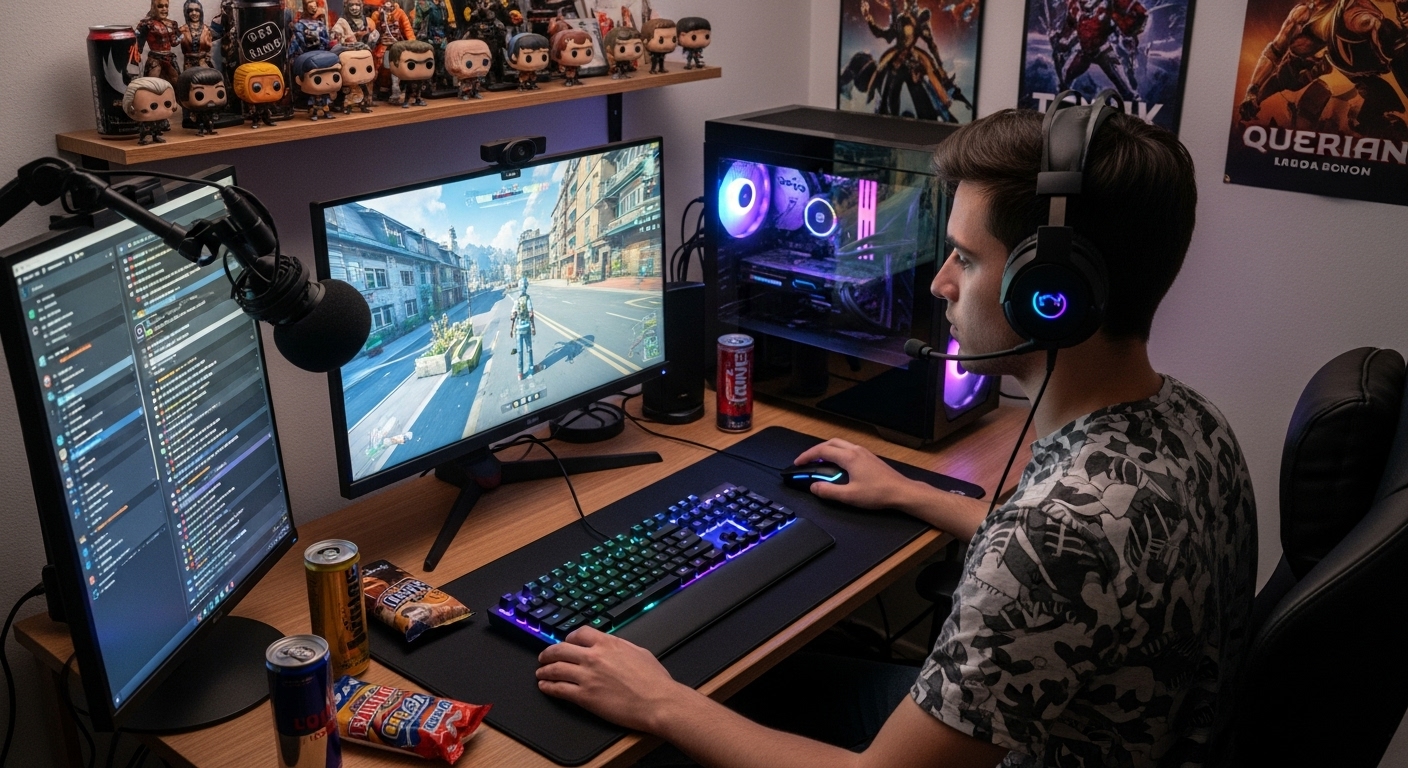
The rise of streaming platforms like Twitch and YouTube has also transformed the way people experience video games. Live streaming has created a new form of entertainment, where gamers can share their experiences with thousands, if not millions, of viewers in real-time. Popular streamers have become celebrities in their own right, and gaming content is now a central part of internet culture.
The Future of Gaming: Virtual Reality and Beyond
As we look to the future, it’s clear that gaming will continue to evolve. One of the most exciting areas of development is virtual reality (VR). While VR has been around for decades in one form or another, the technology has finally reached a point where it’s becoming accessible to mainstream consumers. Devices like the Oculus Rift, HTC Vive, and PlayStation VR are allowing players to step into entirely new worlds, providing an unparalleled level of immersion.
In addition to VR, augmented reality (AR) is also beginning to make waves in the gaming world. Games like Pokémon GO have shown that AR can create unique, real-world experiences where players can interact with virtual elements in their physical environments.
Artificial intelligence (AI) and machine learning are also set to play a huge role in the future of gaming. These technologies could allow for more sophisticated NPC behavior, dynamic storylines, and personalized gaming experiences that adapt to the player’s preferences and playstyle.