Introduction
Gaming has always been at the forefront of technological innovation. From the early days of pixelated arcade machines to the rise of immersive virtual reality headsets, the industry has constantly sought ways to make games more realistic, interactive, and engaging. One of the most exciting frontiers in this ongoing evolution is holographic gaming. This emerging field envisions a world where players can step into three-dimensional interactive environments projected into physical spaces, creating experiences that blend the real and digital worlds seamlessly. Holographic gaming promises to reshape how we play, socialize, and even learn, offering possibilities that go far beyond the current boundaries of traditional video games.
The concept of holography has fascinated scientists, engineers, and storytellers for decades. Popular culture has long depicted holograms as futuristic tools for communication and entertainment, from holographic chess in space-themed films to lifelike projections of characters. Now, with advances in display technology, computing power, and artificial intelligence, these visions are moving closer to reality. The future of holographic gaming could redefine the relationship between humans and digital environments, transforming not only the gaming industry but also education, healthcare, and social interaction.
What Is Holographic Gaming
Holographic gaming refers to interactive entertainment that uses holography, a technology capable of creating three-dimensional projections of images that appear to exist in physical space. Unlike virtual reality, which immerses players in digital worlds through headsets, holographic gaming allows players to see and interact with virtual objects without being fully removed from their environment. Instead of being confined to a screen or wearable display, holograms can fill a room, appear on a tabletop, or even surround players in real-time.
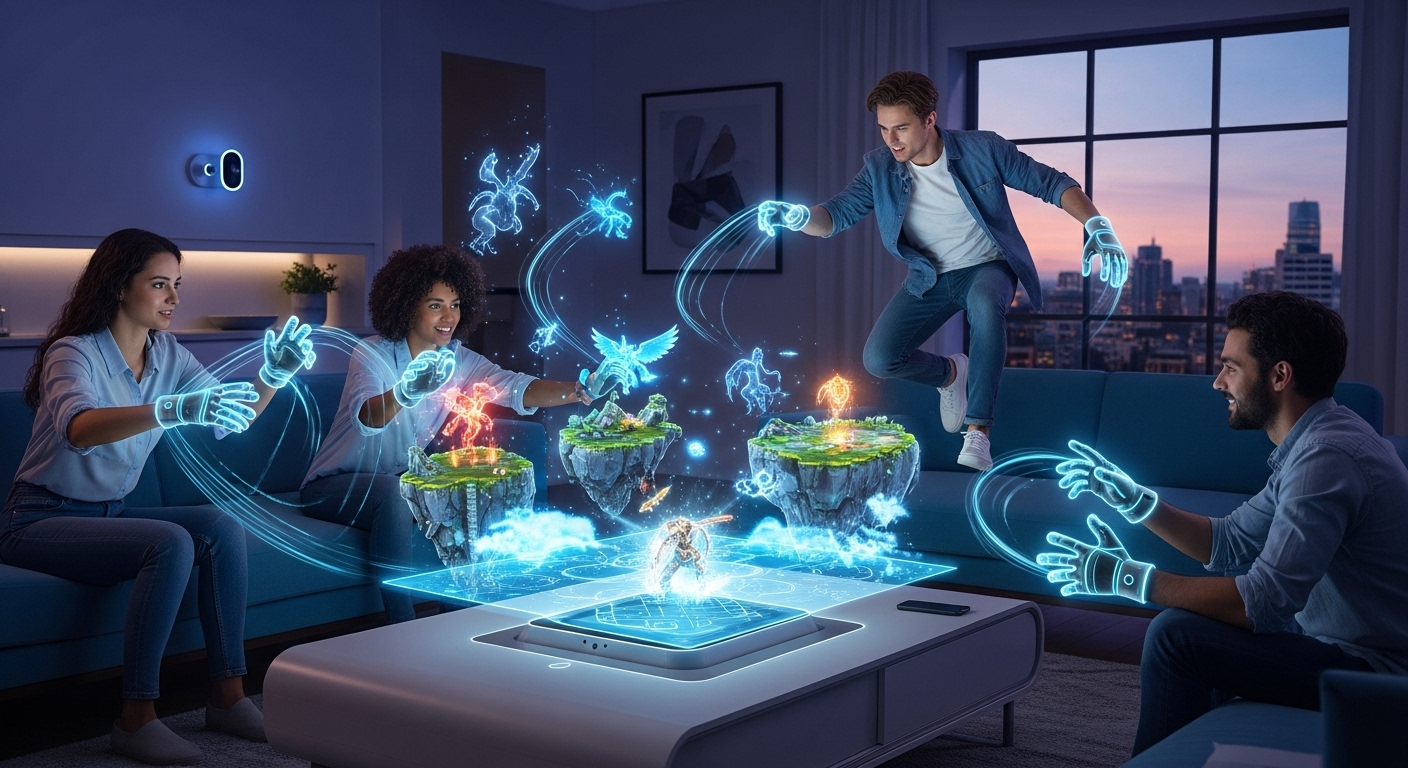
This form of gaming often overlaps with augmented reality, but while augmented reality overlays digital objects on top of the real world through devices like glasses or phone screens, holographic gaming aspires to create free-floating, fully visible 3D objects that can be viewed naturally from different angles. Imagine summoning a dragon into your living room, watching it fly around your furniture, and interacting with it physically as if it were truly there. That is the promise of holographic gaming.
The Technology Behind Holographic Gaming
The realization of holographic gaming requires advances across multiple technological domains. First and foremost, display technology must be capable of producing convincing, stable, high-resolution holograms visible to the naked eye. Current systems rely on light diffraction, projection techniques, or head-mounted devices to create these illusions. As these technologies improve, they will allow for more immersive and realistic experiences.
Equally important is the role of artificial intelligence and machine learning. For holograms to interact meaningfully with players, they must recognize gestures, voices, and even emotions. Motion tracking, spatial mapping, and real-time data processing will ensure holograms can respond naturally to player input. Cloud computing and edge computing will play a role in supporting these experiences by handling the vast amount of data necessary for smooth performance.
Finally, haptic feedback and wearable technology could enhance holographic gaming by giving players the ability to feel holograms. Imagine not just seeing a sword in your hand but feeling its weight or the vibration of a clash. As hardware and software converge, holographic gaming will move from concept to reality.
The Evolution of Gaming Toward Holography
Gaming has always moved toward greater immersion. Early video games were two-dimensional, with limited interaction. The introduction of 3D graphics in the 1990s revolutionized visuals and gameplay. Later, online multiplayer created new ways to connect with other players worldwide. Virtual reality and augmented reality further pushed boundaries, allowing players to step inside digital worlds or blend them with reality. Holographic gaming represents the next step in this journey.
Just as the leap from 2D to 3D transformed entire genres, holography could birth new types of gameplay. Traditional gaming relies on screens as windows into another world. Holographic gaming removes the window, bringing the world into the player’s environment. Instead of controlling avatars on a screen, players may find themselves physically moving, strategizing, and collaborating with holographic elements that coexist with their reality. This leap forward could be as transformative as the shift from static board games to dynamic video games decades ago.
Potential Gameplay Experiences
The potential gameplay experiences offered by holographic gaming are vast. In adventure games, players might walk through their own living rooms while navigating virtual dungeons that blend with physical space. In strategy games, holographic armies could march across tables, allowing players to manipulate troops with hand gestures. Sports games could project full-sized athletes onto local courts, where players compete alongside or against them.
Multiplayer experiences will also become far more engaging. Friends from across the globe could appear as holographic avatars in the same room, interacting with shared environments. Cooperative puzzle games could require players to manipulate holograms together, while competitive games might feel like living chess matches with lifelike pieces. Educational games could bring history to life, projecting holographic re-creations of past civilizations, while training simulations might prepare professionals in fields like medicine or engineering. The possibilities are limited only by imagination and technological development.
Social and Cultural Implications
Holographic gaming will not just change how we play but also how we interact socially. Gaming has always been a social activity, from couch co-op to online multiplayer communities. Holography has the potential to make these interactions even more intimate and lifelike. Instead of joining friends in voice chat or through avatars on a flat screen, players could sit around a table together, represented as holograms, sharing laughter, strategy, and camaraderie as if they were physically present.
This has broader implications for social connection in a digital age. Families separated by distance could gather for holographic game nights. Communities could form around shared holographic spaces, breaking down barriers of geography. Cultural exchange could become more vivid, with players experiencing games inspired by traditions and storytelling from around the world in shared holographic settings.
The Role of Artificial Intelligence
Artificial intelligence will be central to the success of holographic gaming. AI-powered holograms can serve as dynamic characters, opponents, or allies that adapt to player behavior. Unlike scripted non-player characters, these holograms could evolve, learn, and react in realistic ways, creating more personalized and challenging experiences. AI will also enhance multiplayer by managing environments, balancing difficulty, and mediating between physical and digital inputs.
Moreover, AI could facilitate accessibility. By recognizing gestures, speech, or even eye movement, holographic systems could provide inclusive gaming experiences for people with disabilities. Adaptive AI could tailor games to individual preferences, ensuring that holographic gaming is as engaging for a casual player as it is for a competitive enthusiast.
The Business of Holographic Gaming
As holographic gaming develops, it will create new opportunities for the gaming industry. Game developers will design entirely new genres and mechanics that leverage holographic features. Hardware companies will invest in creating affordable holographic displays and accessories. Cloud service providers will expand infrastructure to support the data demands of holographic worlds.
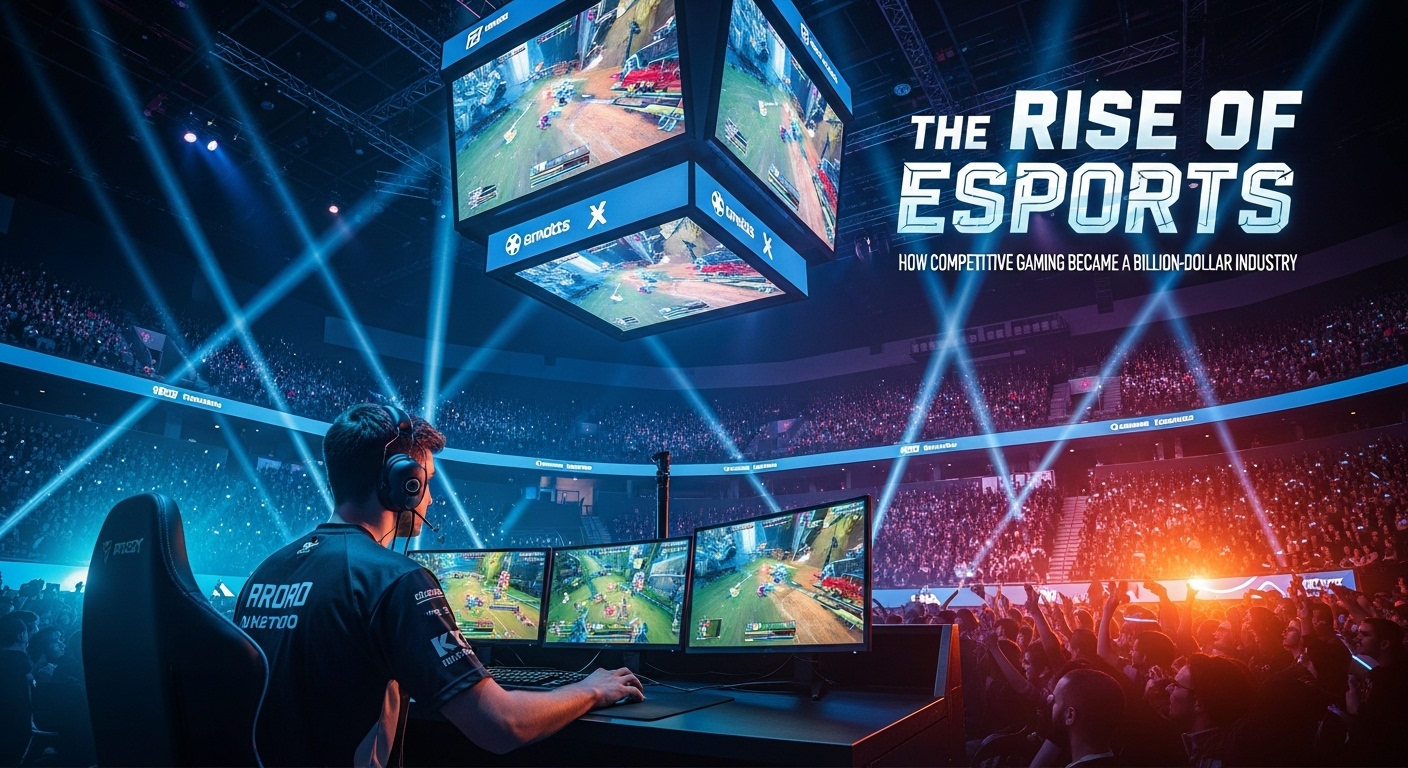
The business model may also evolve. Subscription services, microtransactions, and in-game economies could extend into holographic experiences. Imagine buying holographic furniture for a virtual environment or unlocking new holographic characters to join your games. Esports, too, could take on a new dimension, with audiences watching holographic tournaments projected into arenas or living rooms around the world. The commercialization of holographic gaming has the potential to reshape entertainment economics.
Challenges Ahead
Despite its promise, holographic gaming faces significant challenges. Technological hurdles such as display resolution, latency, and affordability must be addressed. Current holographic projections often require specialized equipment and remain limited in scope. Mass adoption will depend on creating systems that are both powerful and accessible to everyday consumers.
Content creation is another obstacle. Developing holographic games requires new skills, tools, and design philosophies. Traditional game engines must adapt to holographic environments, and developers must rethink how players will interact in three dimensions. Additionally, issues of privacy and security will become more prominent, as holographic systems may collect vast amounts of data about physical spaces and player behavior.
Finally, societal acceptance must be considered. As with any new technology, there will be debates about screen time, social isolation, and the potential impact on physical and mental health. Striking a balance between innovation and responsibility will be critical to the success of holographic gaming.
The Intersection with Other Technologies
Holographic gaming will not develop in isolation. It will intersect with other cutting-edge technologies to create even richer experiences. Virtual reality and augmented reality already provide immersive environments, and holography could merge with them to offer hybrid experiences. Wearable devices and haptic suits could bring touch and physical feedback to holograms. Cloud gaming will allow complex holographic experiences to be streamed without requiring high-end local hardware. Even blockchain and digital ownership may play a role, enabling players to buy, sell, or trade holographic items across games.
The convergence of these technologies will accelerate the growth of holographic gaming, creating ecosystems that extend beyond entertainment into education, healthcare, and business. The boundaries between gaming and other industries will blur, making holography a transformative force across society.
The Educational Potential of Holographic Gaming
While the primary focus of holographic gaming is entertainment, its educational potential cannot be overlooked. Games have long been used as tools for learning, and holography could elevate this to new levels. Imagine students exploring holographic models of ancient civilizations, walking through recreated historical events, or dissecting holographic organisms in biology class. Complex subjects like physics and chemistry could be visualized in ways that make abstract concepts tangible.
Holographic gaming could also revolutionize training. Surgeons could practice procedures on holographic patients. Engineers could simulate building projects in real environments. Military personnel could engage in realistic training exercises without physical risks. By blending play with education, holographic gaming could make learning not only more effective but also more engaging.
The Future Landscape of Gaming
Looking ahead, the future of holographic gaming appears both ambitious and inevitable. As technology matures, the line between reality and digital creation will continue to blur. Gaming will no longer be confined to consoles, screens, or headsets but will expand into the very spaces we inhabit. Players will walk through worlds that coexist with their homes, workplaces, and public spaces.
This shift will redefine not only how we play but also how we think about space, time, and interaction. Holographic gaming could become a staple of daily life, much as smartphones did in the past two decades. The journey may be gradual, marked by incremental advances and hybrid experiences, but the trajectory is clear: gaming is moving toward a holographic future.
Conclusion
The future of holographic gaming is filled with promise, innovation, and challenges. It represents the next great leap in the evolution of interactive entertainment, building on decades of technological progress. By creating three-dimensional, interactive experiences that exist in physical space, holographic gaming will change how we play, learn, and connect. From immersive adventures and competitive battles to educational simulations and social gatherings, holography offers possibilities that stretch far beyond the imagination of traditional gaming.
While obstacles remain, from technological limitations to societal acceptance, the momentum toward holographic experiences is undeniable. As displays improve, artificial intelligence evolves, and computing power grows, holographic gaming will become not just a futuristic dream but a lived reality. For players and creators alike, this future holds the potential to redefine the very essence of gaming. The age of holographic play is on the horizon, and when it arrives, it will transform entertainment in ways we are only beginning to understand.