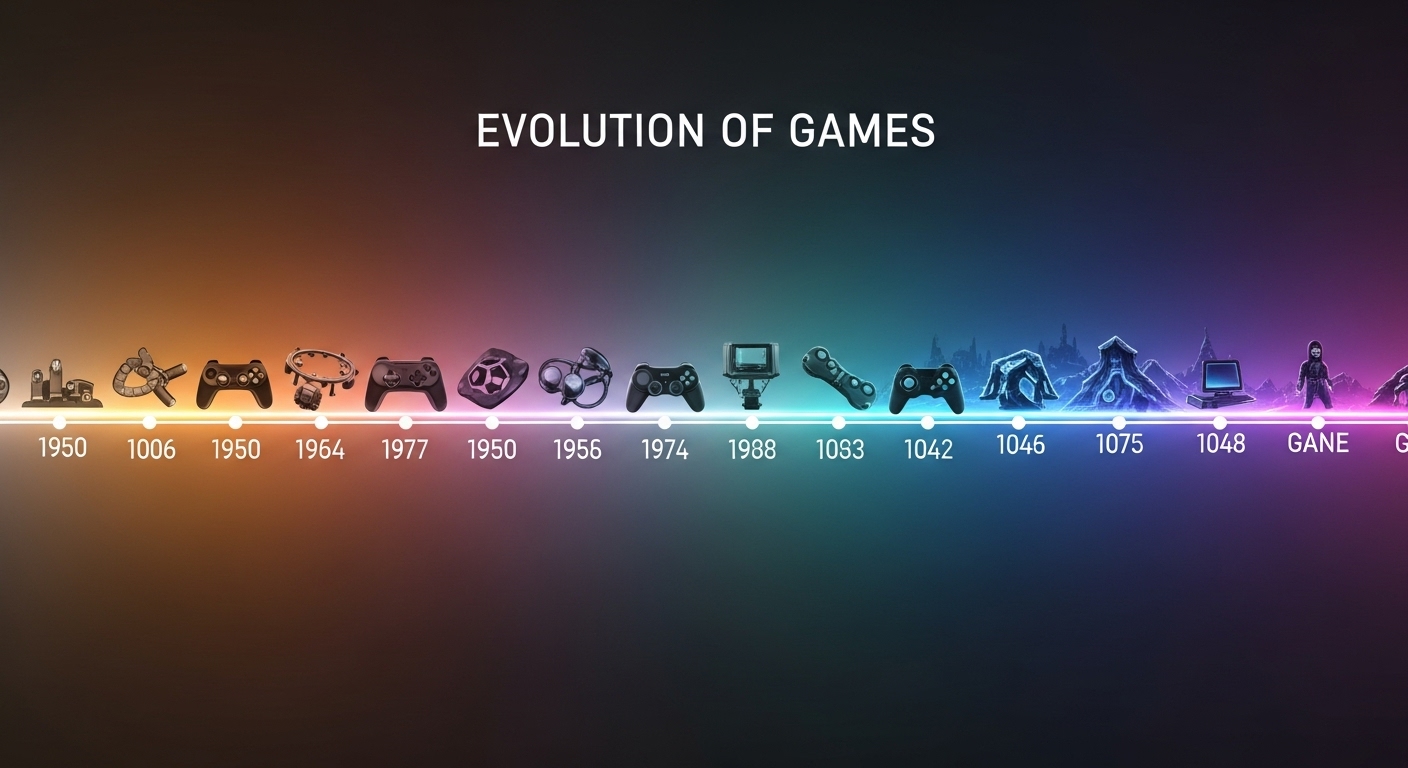
Gaming has come a long way since its inception in the 20th century. What started as simple pixelated graphics and basic mechanics has grown into a multi-billion-dollar industry, encompassing everything from immersive open-world adventures to fast-paced online multiplayer competitions. Today, video games are not just entertainment; they are a cultural phenomenon that influences art, technology, and even social interactions. In this blog post, we’ll explore the evolution of gaming, the different genres that have emerged, and how gaming continues to shape our world.
The Birth of Gaming: Early Years and the Rise of Arcades
The origins of modern gaming can be traced back to the early 1970s when the first commercially successful arcade games were introduced. One of the most famous early games was Pong, created by Atari founder Nolan Bushnell in 1972. It was a simple tennis simulation where two players controlled paddles and bounced a ball back and forth. Though rudimentary by today’s standards, Pong was groundbreaking in its time and became the catalyst for the arcade gaming industry.
During the late 1970s and 1980s, arcades became a cultural staple. Games like Space Invaders, Pac-Man, and Donkey Kong captured the imagination of millions, offering a form of entertainment that had never been seen before. Players would line up to insert coins into machines, competing for high scores and bragging rights. This was the golden age of arcade gaming, and it marked the beginning of video games as a mainstream activity.
The Rise of Home Consoles
While arcades dominated the gaming landscape for many years, the introduction of home consoles in the late 1970s and early 1980s shifted the focus to private, at-home gaming experiences. The Atari 2600, released in 1977, was one of the first home consoles to achieve widespread success. It featured interchangeable cartridges that allowed players to choose from a variety of games without needing to leave their homes.
In the following decades, consoles like the Nintendo Entertainment System (NES), Sega Genesis, and Super Nintendo Entertainment System (SNES) would come to define the gaming experience for a generation of players. These consoles featured better graphics, more complex games, and the ability to play for hours on end without needing to feed coins into machines. Iconic games like Super Mario Bros., The Legend of Zelda, and Sonic the Hedgehog became household names and solidified video games as a central part of popular culture.
The Advent of 3D Gaming: A Quantum Leap Forward
In the 1990s, gaming underwent a major transformation with the introduction of 3D graphics. With the launch of consoles like the Sony PlayStation and the Nintendo 64, players were introduced to a new dimension in gaming. No longer confined to two-dimensional spaces, game developers began creating expansive worlds that players could explore from every angle.
The shift to 3D gaming allowed for more immersive and realistic experiences. Games like Super Mario 64, Final Fantasy VII, and The Legend of Zelda: Ocarina of Time were revolutionary in how they combined advanced graphics with compelling storytelling and innovative gameplay. The ability to move freely through 3D environments marked a significant leap forward in how games could engage players.
Moreover, this period saw the rise of genre-defining franchises that are still beloved today. Grand Theft Auto, Metal Gear Solid, and Crash Bandicoot were just a few of the titles that laid the groundwork for modern gaming and solidified the PlayStation as a dominant force in the industry.
The Evolution of Online Gaming
As internet access became more widespread in the late 1990s and early 2000s, online gaming began to emerge as a major facet of the gaming experience. The introduction of multiplayer online games, such as Diablo II and StarCraft, allowed players from around the world to connect and compete against each other in real time.
In the following years, online gaming evolved into a social experience with massive multiplayer games like World of Warcraft (WoW), Halo 2, and Counter-Strike bringing players together for large-scale battles and cooperative missions. For many players, these games offered more than just entertainment—they provided a virtual space to connect with friends, join communities, and form long-lasting relationships.
The 2010s saw the rise of competitive eSports, where professional players compete in tournaments for massive cash prizes. Games like League of Legends, Dota 2, and Fortnite brought gaming into the mainstream as a legitimate form of competitive sport, attracting millions of viewers and sponsors alike.
The Impact of Mobile Gaming
With the proliferation of smartphones in the 2000s, mobile gaming quickly became a dominant force in the industry. Initially, mobile games were simple and casual, with titles like Snake on Nokia phones offering basic entertainment during short breaks. However, with the introduction of the Apple App Store in 2008 and the Google Play Store shortly after, mobile gaming evolved rapidly.
Games like Angry Birds, Candy Crush Saga, and Clash of Clans became global phenomena, appealing to a broad audience of casual gamers who might not have otherwise considered traditional console or PC gaming. The accessibility of mobile games allowed people to play anywhere, at any time, making gaming a constant companion in daily life.
Mobile gaming also led to the rise of free-to-play models, where games are available for free but offer in-app purchases for cosmetic items, upgrades, or additional content. This shift has changed how games are monetized, creating a new revenue stream for developers and enabling the creation of games that can be enjoyed by anyone with a smartphone.
The Role of Indie Games in Shaping the Industry
While big-budget games from major studios still dominate the industry, indie games have become an increasingly important part of the gaming ecosystem. Indie developers, often working with limited resources, have created some of the most innovative and critically acclaimed games in recent years.
Games like Undertale, Hollow Knight, Celeste, and Cuphead are prime examples of how small studios can produce unique, thought-provoking, and highly entertaining games. These indie titles have not only captured the hearts of gamers but also demonstrated that creativity and innovation can thrive even in a market dominated by big corporations.
The rise of digital distribution platforms like Steam and itch.io has made it easier than ever for indie developers to reach global audiences. This has led to a flourishing indie scene, with developers experimenting with new gameplay mechanics, storytelling techniques, and art styles. Indie games have brought fresh perspectives to the gaming world, challenging conventions and pushing the boundaries of what games can be.
Virtual Reality: The Next Frontier in Gaming
In recent years, virtual reality (VR) has emerged as one of the most exciting developments in gaming technology. VR headsets like the Oculus Rift, HTC Vive, and PlayStation VR have allowed players to step into fully immersive virtual worlds, where they can interact with their environment in ways that were previously impossible.
The promise of VR gaming is to offer an experience that is as close to reality as possible. Whether it’s exploring alien planets in No Man’s Sky, fighting off zombies in Resident Evil 7, or solving puzzles in The Room VR, VR gaming opens up new possibilities for interactive storytelling and gameplay.
Although VR is still in its early stages and requires specialized hardware, the technology is rapidly improving. With more developers jumping on board and hardware becoming more affordable, VR has the potential to revolutionize the gaming industry in the coming years, offering players an unprecedented level of immersion and interactivity.
The Future of Gaming: AI, Cloud Gaming, and Beyond
As technology continues to advance, the future of gaming looks incredibly promising. Artificial intelligence (AI) is already being used to create more dynamic and intelligent NPCs (non-playable characters), which makes for more immersive and unpredictable gameplay. AI could also help generate procedurally generated content, allowing for endless variations of worlds and scenarios in games.
Cloud gaming is another exciting development that could transform the industry. Platforms like Google Stadia, NVIDIA GeForce Now, and Xbox Cloud Gaming are allowing players to stream games directly to their devices, bypassing the need for high-end hardware. This could democratize gaming by allowing anyone with an internet connection to play the latest AAA titles without needing an expensive console or gaming PC.
Moreover, advances in augmented reality (AR) could further blur the line between the physical and digital worlds, opening up new possibilities for interactive and location-based games.
Conclusion
The world of gaming has undergone a dramatic transformation, evolving from simple pixelated games in arcades to massive, immersive worlds that offer complex narratives and online multiplayer experiences. Today, video games are more than just entertainment—they are an integral part of modern culture and a reflection of technological progress. With innovations like virtual reality, mobile gaming, and cloud-based platforms, the future of gaming looks brighter than ever. Whether you’re a casual player or a hardcore gamer, one thing is certain: the gaming world will continue to captivate, challenge, and inspire for years to come.